Healthcare runs on data, and that data is among the most sensitive information any industry handles. Electronic protected health information (ePHI) flows through EHRs, patient portals, telehealth platforms, and connected devices. Every one of those systems must comply with the Health Insurance Portability and Accountability Act (HIPAA). For teams building or buying healthcare software, HIPAA is not a checkbox at the end of a project. It is a set of design constraints that shape architecture from day one.
HIPAA compliance software refers to healthcare software engineered to meet the HIPAA Privacy and Security Rules. Capabilities such as access control, encryption, audit logging, and breach notification workflows are built in from the start. There is no official “HIPAA certified” label for software. The regulation binds covered entities and business associates — software either supports their compliance obligations or undermines them. The difference between the two comes down to specific safeguards and development practices.
This guide explains what HIPAA actually requires from software, the current state of the Security Rule, and the practices that keep patient data protected across the development lifecycle. For a broader view of how compliant healthcare systems get built, see our guide to custom healthcare software development.
What HIPAA Requires from Healthcare Software
HIPAA applies to covered entities — providers, health plans, and clearinghouses. It also applies to business associates that create, receive, maintain, or transmit ePHI on their behalf. Software vendors almost always fall into the second category, which makes them directly liable for violations and bound by Business Associate Agreements (BAAs).
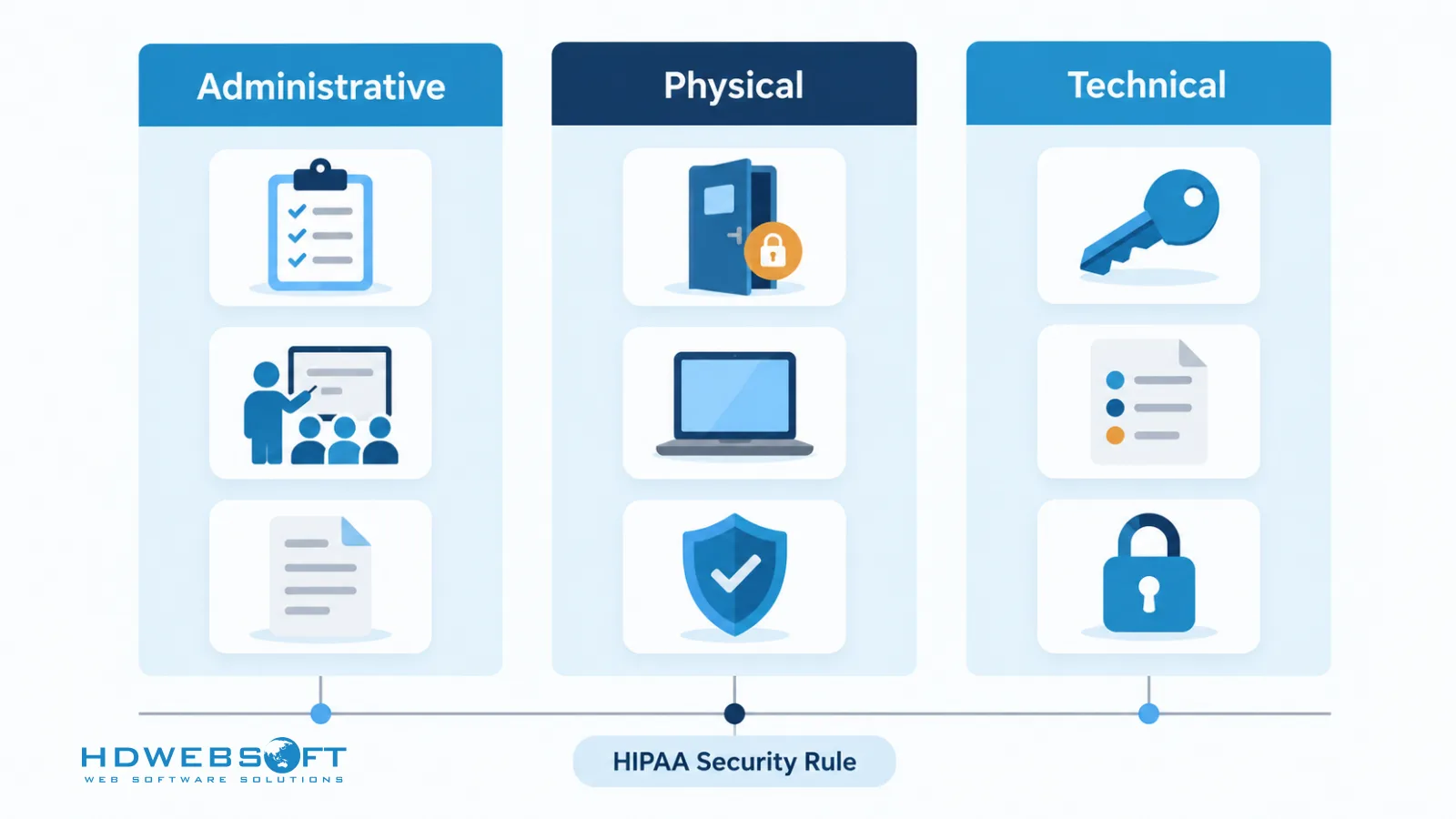
The HIPAA Security Rule organizes requirements into three safeguard categories:
| Safeguard category | What it covers | Software implications |
|---|---|---|
| Administrative | Risk analysis, workforce training, incident response, BAAs | Risk assessment tooling, training workflows, incident logging, vendor management |
| Physical | Facility and device access controls | Workstation controls, device encryption, secure disposal workflows |
| Technical | Access control, audit controls, integrity, authentication, transmission security | RBAC, unique user IDs, immutable audit logs, integrity checks, MFA, encryption in transit and at rest |
A proposed Security Rule update published in December 2024 would tighten these requirements significantly — making encryption and multi-factor authentication mandatory rather than “addressable,” requiring network segmentation, asset inventories, annual penetration testing, and 72-hour restoration capabilities. Even before the rule is finalized, healthcare’s breach landscape and active OCR enforcement make these controls the practical baseline for any new platform. They also intersect with the broader medical software development trends reshaping healthcare technology.
HIPAA Compliance Best Practices for Healthcare Software
Conduct a Thorough Risk Assessment
Every compliant software project starts with a documented risk assessment. Identify the threats your software may face — data breaches, cyberattacks, unauthorized access. Then assess vulnerabilities in code, data storage, and access controls. Prioritize risks by severity so critical concerns get resources first. Risk analysis is a HIPAA administrative requirement, and repeating it as the system evolves is what keeps it meaningful.
Implement the Core Technical Safeguards
The Security Rule’s technical safeguards translate directly into software capabilities:
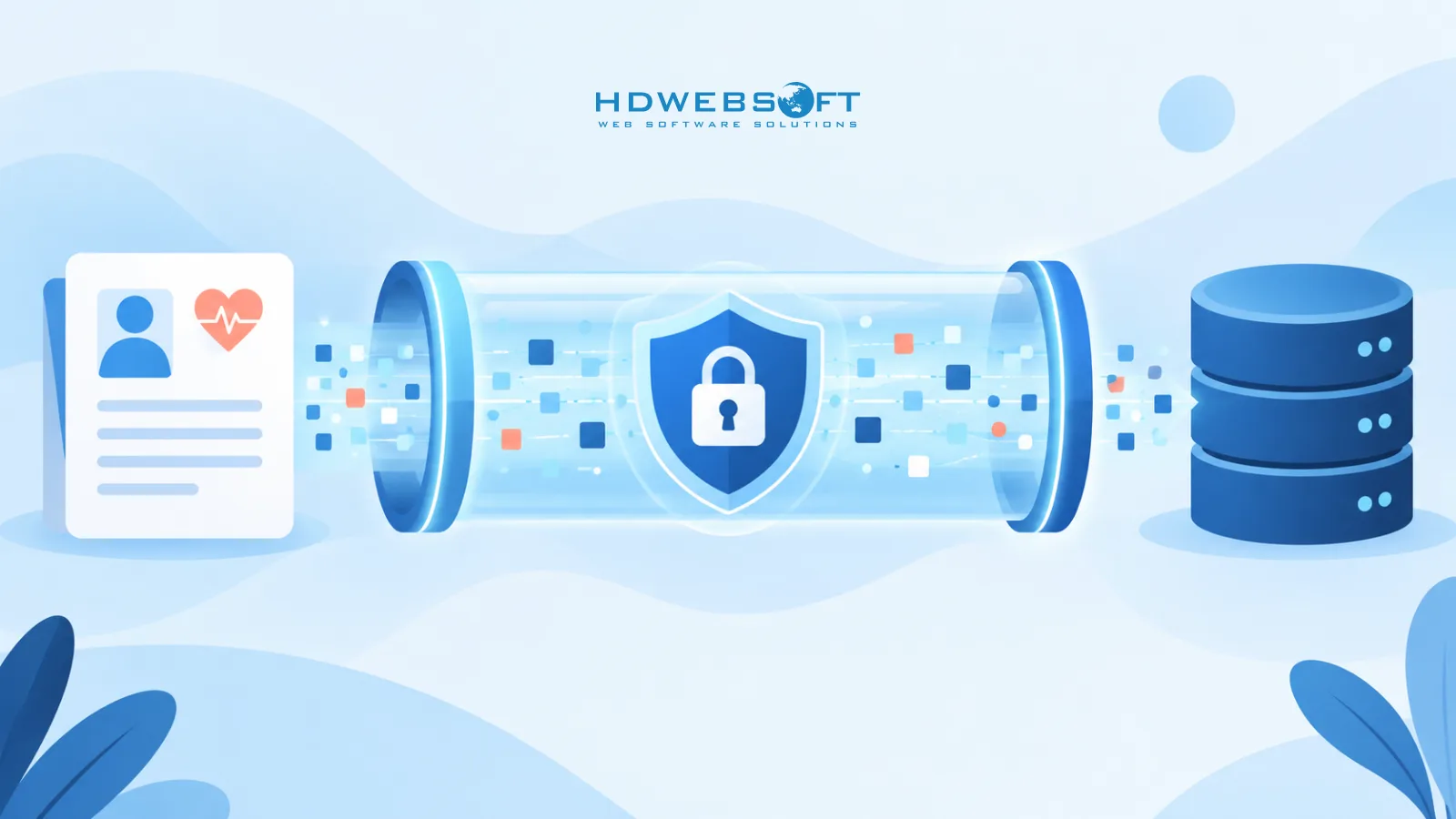
- Data encryption — encrypt all patient data at rest and in transit using strong algorithms, with encryption keys managed securely to prevent unauthorized access.
- Access control — implement strict role-based access control (RBAC) so users reach only the patient information their role requires, backed by unique user IDs and emergency access procedures.
- Audit trails — maintain detailed, tamper-resistant logs of all access and changes to patient records, and review them regularly to detect unauthorized activity.
- Business Associate Agreements — any third-party service your software touches — cloud hosting, analytics, messaging — must operate under a signed BAA.
Run Regular Security Audits and Testing
Compliance is not a launch-day state. Vulnerability assessments combine automated scanning with manual testing to uncover weaknesses scanners miss. Code reviews and static analysis catch security flaws during development rather than after release. Periodic penetration testing simulates real-world attacks to expose exploitable gaps. Under the proposed Security Rule update, annual pen tests and semi-annual vulnerability scans become explicit requirements.
Follow Secure Development Practices
Security has to live inside the development lifecycle, not beside it. Comprehensive security training equips developers to recognize and mitigate risk in their own work. Secure coding standards — such as the OWASP guidelines — ensure security is embedded in architecture and design decisions from the start. This matters even more when building telehealth platforms that protect patient data across remote touchpoints.
Minimize and De-Identify Data
Collect only the patient data the software actually needs, and retain it only as long as necessary — less data means less exposure if a breach occurs. Where possible, anonymize or pseudonymize data so that even a compromised dataset cannot be traced back to individual patients. Our healthcare knowledge and communities platform case study shows how this principle shapes platforms built for patient communities handling sensitive health information.
Secure APIs and Interoperability
Healthcare software constantly exchanges data with EHRs, devices, and partner systems — and every interface is a potential exposure point. Develop well-documented APIs that follow healthcare data exchange standards such as HL7 FHIR, with strong authentication, authorization, and encryption on every connection. FHIR’s resource-based design simplifies integration while keeping data flows controlled and auditable.
Build Privacy by Design
Privacy considerations belong in architecture decisions, not in post-launch patches. Embed privacy requirements into the design phase, and run Data Protection Impact Assessments (DPIAs) to evaluate privacy risks before features ship. For platforms serving EU patients, GDPR adds parallel obligations: pseudonymization, consent management, and data subject rights. These are cheaper to design in than to retrofit.
Plan for Disaster Recovery and Continuity
HIPAA’s contingency plan requirement makes this a compliance obligation, not just good operations. Ensure critical services remain available during natural disasters, cyberattacks, and outages. Test recovery plans regularly and update them as threats and technology evolve. The proposed rule’s 72-hour restoration requirement makes recovery time an explicit target rather than a vague goal.
Train Users Continuously
Most breaches trace back to human error, not technical failure. Ongoing training keeps users, administrators, and staff current on secure data handling. Phishing awareness deserves special attention: phishing remains the most common entry point for attackers targeting healthcare systems. No amount of infrastructure security compensates for a workforce that cannot spot it.
Maintain an Incident Response Plan
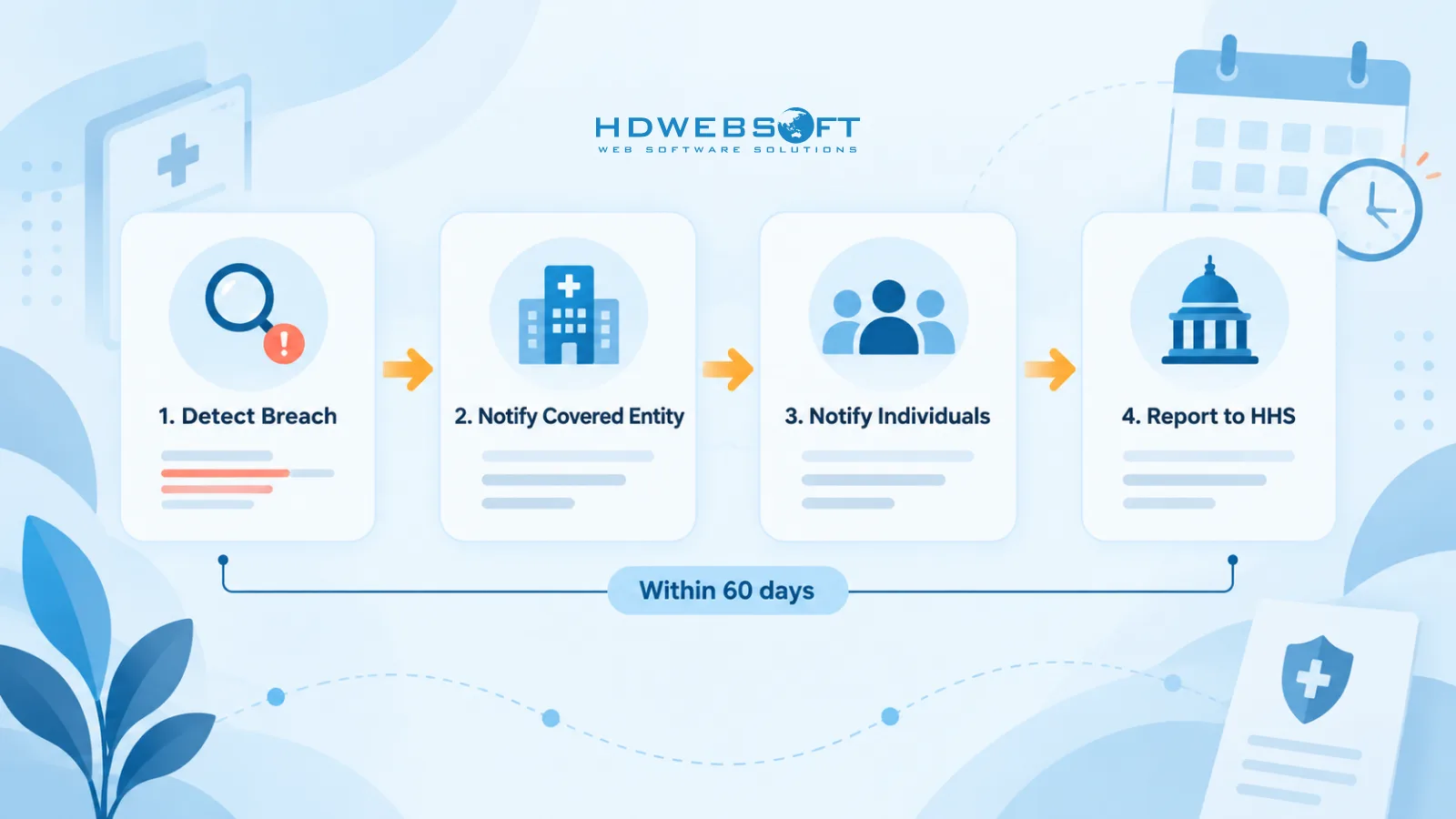
A documented incident response plan defines the steps, roles, and responsibilities for handling a breach before one happens. Under the HIPAA Breach Notification Rule, covered entities must notify affected individuals within 60 days, report to HHS, and for large breaches notify media outlets. Business associates must notify the covered entity. Timely, accurate reporting depends on the audit trails and logging built earlier in this list.
Common HIPAA Compliance Mistakes in Software Projects
- Treating “HIPAA compliant” as a product claim — no certification exists; compliance lives in how the software is deployed, configured, and operated.
- Encryption treated as optional — “addressable” never meant optional, and the proposed rule removes the ambiguity entirely.
- Missing BAAs with subcontractors — cloud providers, analytics tools, and support vendors all need signed agreements before touching ePHI.
- Audit logs that are never reviewed — collecting logs without a review process satisfies the letter of the rule while missing its purpose.
- Compliance bolted on at the end — retrofitting access controls and encryption into a finished product costs multiples of designing them in. For organizations weighing build versus buy, our analysis of custom healthcare solutions and software outsourcing covers how compliance requirements factor into that decision.
Frequently Asked Questions
What is HIPAA compliance software?
HIPAA compliance software is healthcare software designed to meet the requirements of the HIPAA Privacy and Security Rules — including access controls, encryption, audit trails, and breach notification workflows. There is no official HIPAA certification; software supports compliance, but the covered entity or business associate remains responsible for how it is deployed and used.
Does HIPAA require encryption in healthcare software?
Under the current Security Rule, encryption is an “addressable” safeguard — required unless an organization documents why an equivalent alternative is reasonable. The proposed Security Rule update published in late 2024 would make encryption mandatory, so building encryption in from the start is the safe path either way.
What are the technical safeguards required by HIPAA?
The HIPAA Security Rule defines five technical safeguards: access control (unique user IDs, emergency access), audit controls (activity logging), integrity controls (protecting ePHI from improper alteration), person or entity authentication, and transmission security (protecting ePHI in transit, including encryption).
Who needs to comply with HIPAA?
HIPAA applies to covered entities — healthcare providers, health plans, and clearinghouses — and to business associates, the vendors and software providers that create, receive, maintain, or transmit protected health information on their behalf. Business associates must sign a Business Associate Agreement (BAA) and are directly liable for violations.
What happens when HIPAA-compliant software suffers a breach?
The HIPAA Breach Notification Rule requires covered entities to notify affected individuals within 60 days and notify HHS. For breaches affecting 500 or more individuals, prominent media outlets must also be notified. Business associates must notify the covered entity. This is why incident response planning and complete audit trails are mandatory capabilities, not optional features.
Is HIPAA compliance a one-time effort?
No. HIPAA compliance is continuous: risk assessments must be repeated as systems change, and audit logs require ongoing review. Staff need regular training, and vendors must stay under current BAAs. The proposed Security Rule update adds explicit requirements like annual penetration testing and semi-annual vulnerability scans.
Conclusion
HIPAA compliance in healthcare software is an engineering discipline, not a label. The organizations that get it right treat the Security Rule’s safeguards as design inputs — encryption, access control, auditability, and incident readiness built in from the first architecture decision. They maintain compliance as an ongoing operational practice rather than a launch milestone.
HDWEBSOFT is an ISO 9001 and ISO/IEC 27001 certified company with experience building secure, compliance-ready healthcare applications. If you are planning a healthcare software project, explore our healthcare software development services or contact us to discuss how we can help.