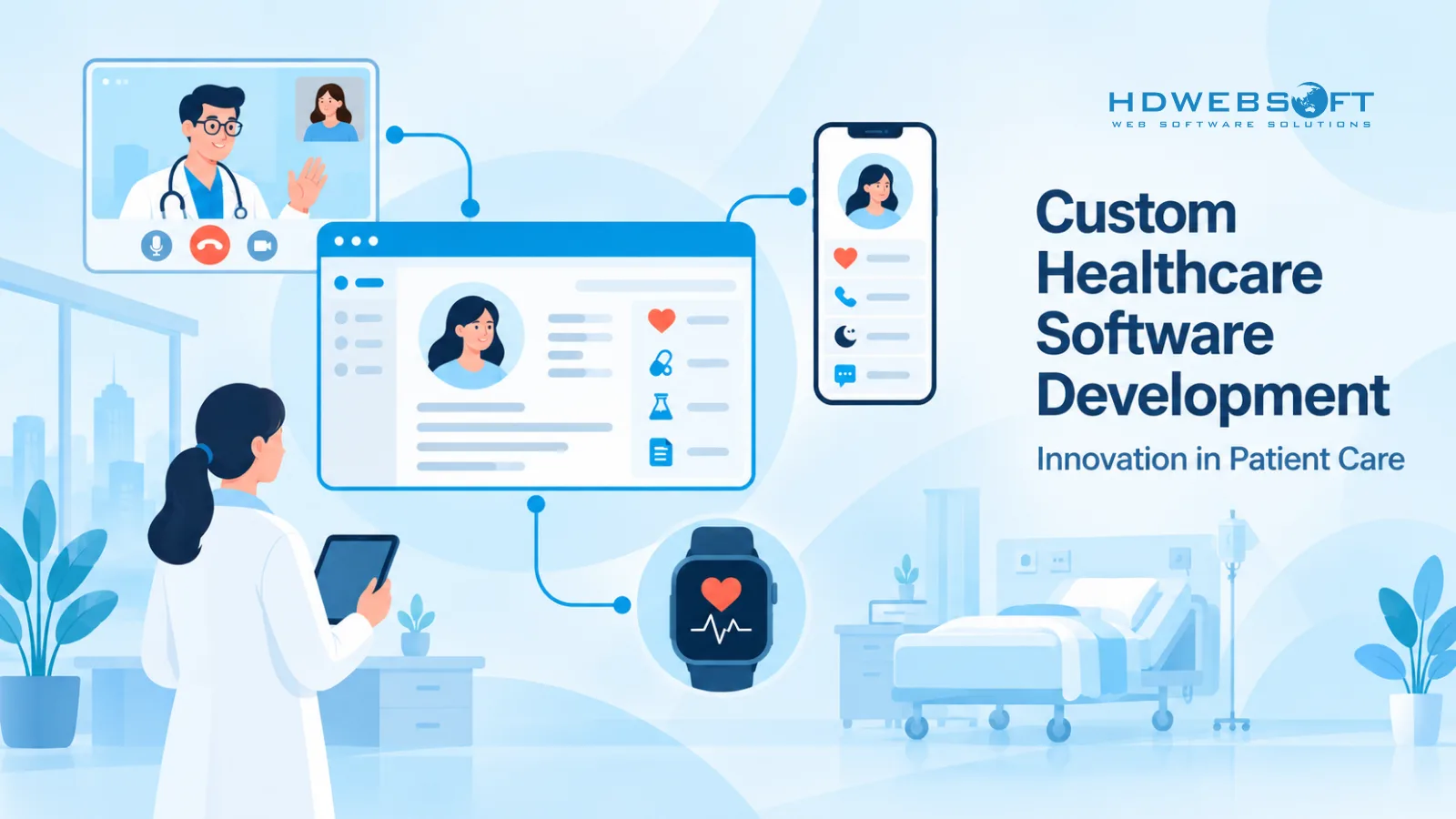
Healthcare runs on software. Every appointment, prescription, lab result, and clinical decision now passes through a digital system — yet many healthcare organizations still operate on generic tools that were never designed for their workflows. That gap is why custom healthcare software development has moved from a niche investment to a strategic priority for providers, payers, and digital health companies.
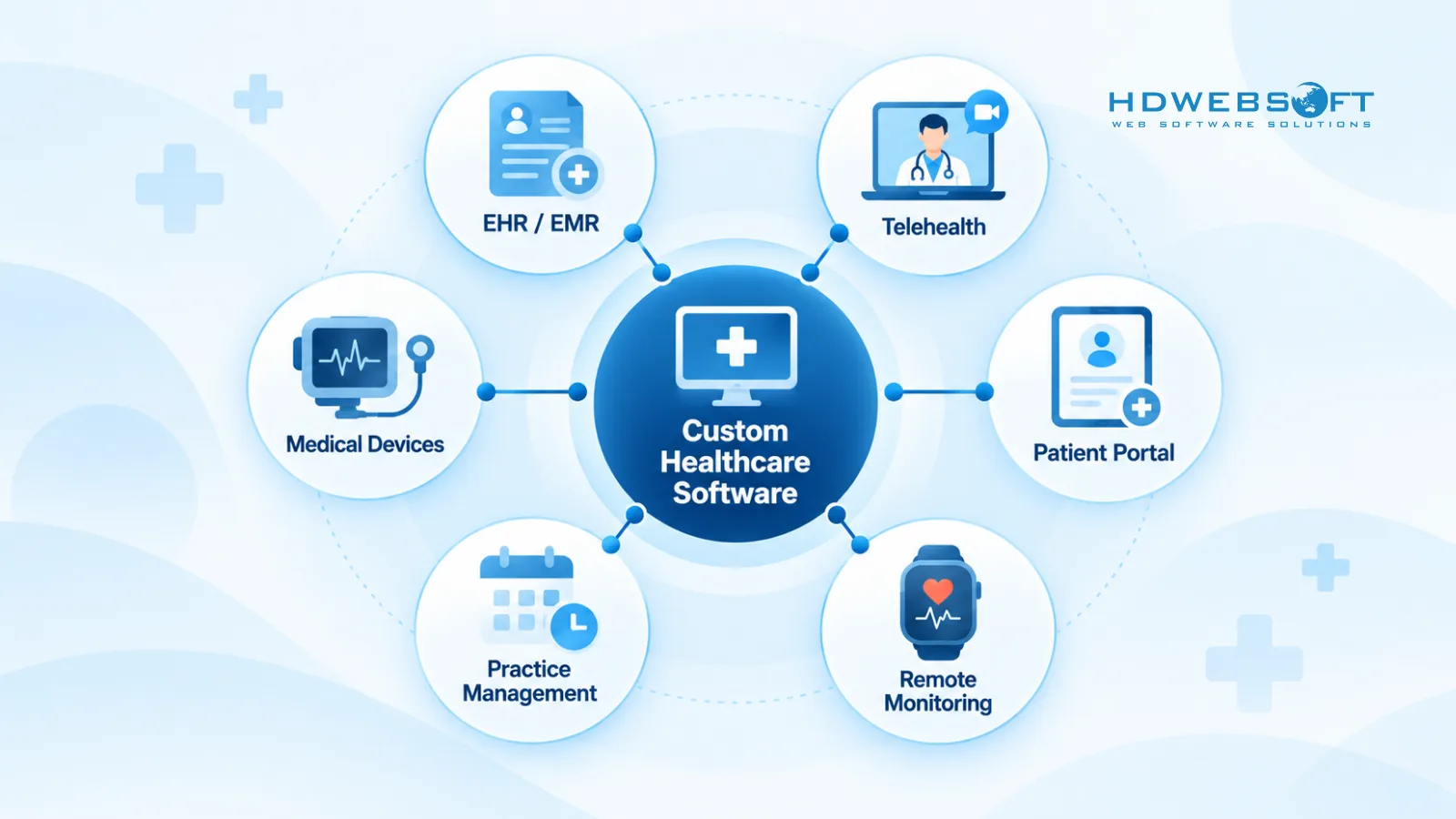
Custom healthcare software development is the design, engineering, and maintenance of software built for a specific healthcare organization’s clinical, operational, or patient-facing needs — rather than adapted from a generic commercial product. It covers systems such as EHR/EMR platforms, telehealth applications, patient portals, remote patient monitoring, and clinical workflow tools, and it must satisfy strict regulatory requirements like HIPAA and interoperability standards such as HL7 FHIR.
This guide covers how technology is reshaping patient care, the main types of healthcare software, the compliance requirements every system must meet, the trends shaping the next generation of health platforms, and how to evaluate a development partner.
How Technology Is Transforming Patient Care
Advancements in technology have had a profound impact on patient care, reshaping nearly every part of the healthcare industry. What began as basic electronic record-keeping has evolved into connected ecosystems that support personalized treatment, remote monitoring, and data-driven clinical decisions.
Artificial intelligence now assists with diagnostics, triage, and clinical documentation. Machine learning models flag deterioration risk earlier than manual review. Connected devices stream patient data directly into care workflows, and interoperability standards let that data follow the patient across providers instead of staying locked inside a single system. The result is software that no longer just records care — it actively participates in delivering it.
Explore more: Trends of Technology in Medical Software Development
Common Types of Custom Healthcare Software
“Healthcare software” covers a wide range of systems, each with distinct users, workflows, and regulatory exposure. Understanding the main categories helps organizations scope a project correctly from the start.
| Type | Primary purpose | Typical capabilities |
|---|---|---|
| EHR/EMR systems | Centralize patient records | Charting, e-prescribing, clinical decision support, order management |
| Telehealth and telemedicine | Deliver care remotely | Video consultations, virtual triage, remote diagnosis, e-visits |
| Patient portals | Give patients access to their care | Records access, appointment scheduling, secure messaging, bill pay |
| Remote patient monitoring (RPM) | Track health outside the clinic | Device data ingestion, alerts, trend dashboards, escalation workflows |
| Practice management | Run the business of care | Scheduling, billing, claims processing, insurance verification |
| Medical device software / SaMD | Perform medical functions | Diagnostics, monitoring algorithms, device control — often FDA-regulated |
| Laboratory and imaging systems | Manage diagnostics | LIS, RIS, PACS integration, results routing |
Most real-world platforms combine several of these categories. A telehealth product, for example, typically needs scheduling, e-prescribing, and EHR integration — which is why scoping accuracy matters more than feature lists.
Why Patient Engagement and Digital Care Matter
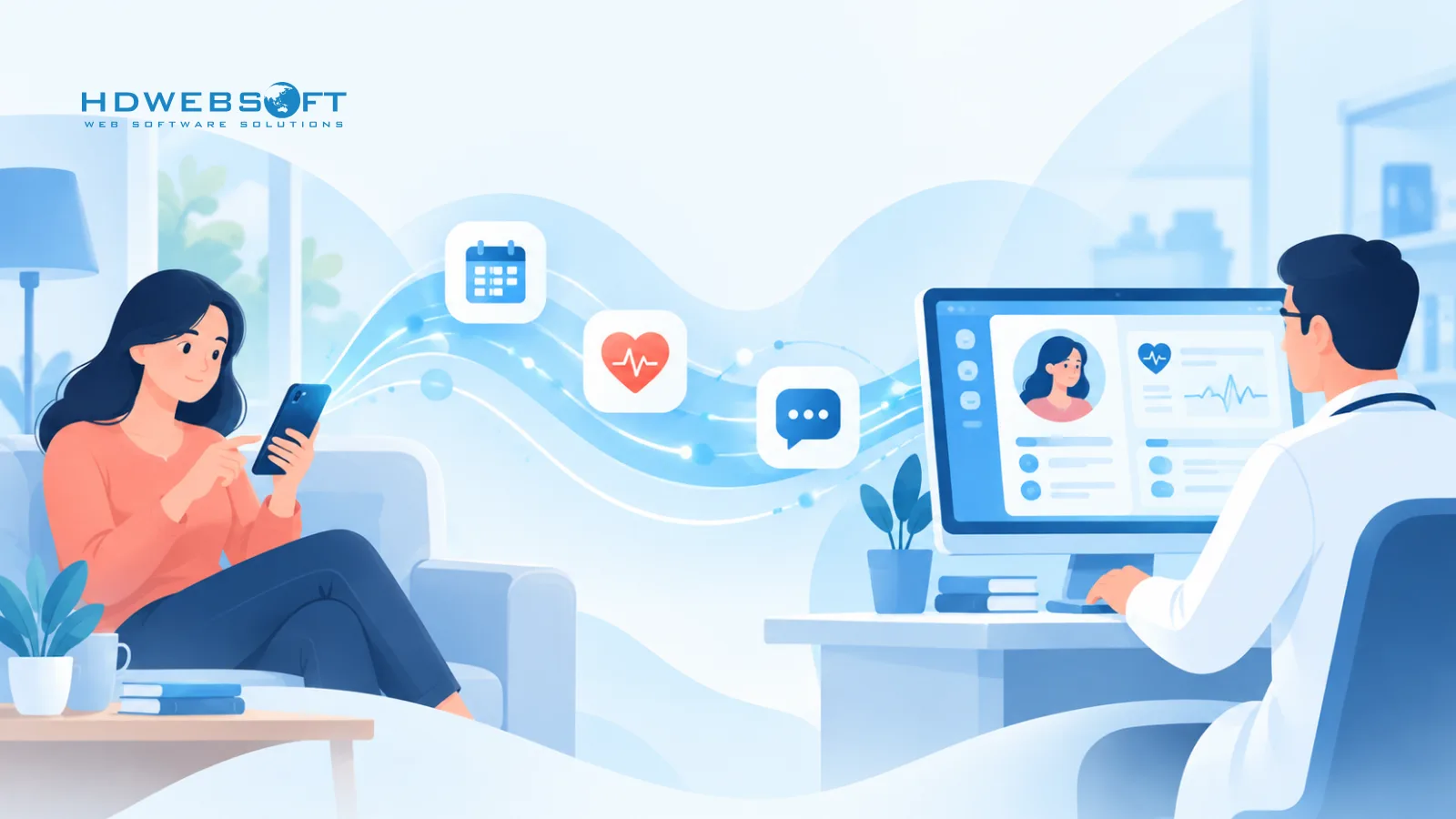
Patient engagement is no longer a nice-to-have. Providers are expected to deliver patient-centered care, and software is the primary channel through which patients experience that care outside the exam room. Patient portals and mobile applications let people access their health information, communicate with providers, and take an active role in managing treatment — which consistently correlates with better adherence and outcomes.
Patient Portal Software
Patient portals have become a core layer of the healthcare software stack, providing a single platform for engagement and health information exchange. A well-built portal gives patients access to medical records, appointment scheduling, medication information, and secure messaging with their care team.
For providers, portals reduce administrative load and create a direct communication channel for education, reminders, and follow-up care. They also serve as the front door for remote patient monitoring programs, letting care teams track patient-reported and device-generated data between visits and intervene before small issues become admissions.
Mobility and Patient Engagement
Mobile applications have turned patient engagement from a periodic event into a continuous relationship. Custom healthcare apps built around specific patient needs deliver three compounding benefits:
- Improved patient experience — easy access to services, scheduling, and health information from a device patients already carry.
- Remote patient monitoring — continuous data collection lets providers track health metrics, detect early warning signs, and intervene when necessary.
- Better patient outcomes — self-management tools and treatment-plan adherence support translate engagement into measurable clinical results.
Key Segments of the Healthcare Industry
Healthcare is not one market but several, each with distinct needs. Software that works for a hospital system will not fit a payer’s claims operation or a pharmaceutical research pipeline. Custom healthcare software development delivers value precisely because it can target each segment’s real workflow.
Payers and Financiers
Payers — insurers, health plans, and financing organizations — depend on software for claims processing, billing accuracy, and financial data management. Custom solutions streamline adjudication, reduce claim errors, and enforce the security controls needed to protect both patient data and financial information. For payer organizations, regulatory compliance and fraud detection are as central as operational efficiency.
Providers
Hospitals, clinics, and medical practices rely on software to deliver care itself. Custom solutions for providers focus on clinical workflows: record access at the point of care, care coordination across departments, and integration between scheduling, documentation, and billing systems. Usability matters enormously here — software that slows clinicians down gets worked around, not used — alongside data security and regulatory compliance.
Life Sciences and Pharma
The life sciences and pharmaceutical sector uses software for research data management, clinical trial operations, and the development of new therapies. Custom platforms support large-scale data analytics, secure storage of sensitive research data, and compliance with the regulatory frameworks governing drug development. Robust tooling here directly shortens research cycles and improves the quality of evidence generation.
Digital Health
Digital health is the newest and fastest-moving segment: telehealth platforms, remote monitoring programs, wearable integrations, and software-based therapeutics. Organizations in this space often need to build entirely new product categories rather than digitize existing processes, which makes custom development the default rather than the exception.
Compliance, Security, and Interoperability Requirements
Custom healthcare software development operates under regulatory constraints that most other software never touches. These requirements shape architecture decisions from day one — retrofitting compliance onto a finished product is expensive and often impossible.
HIPAA and Patient Data Privacy
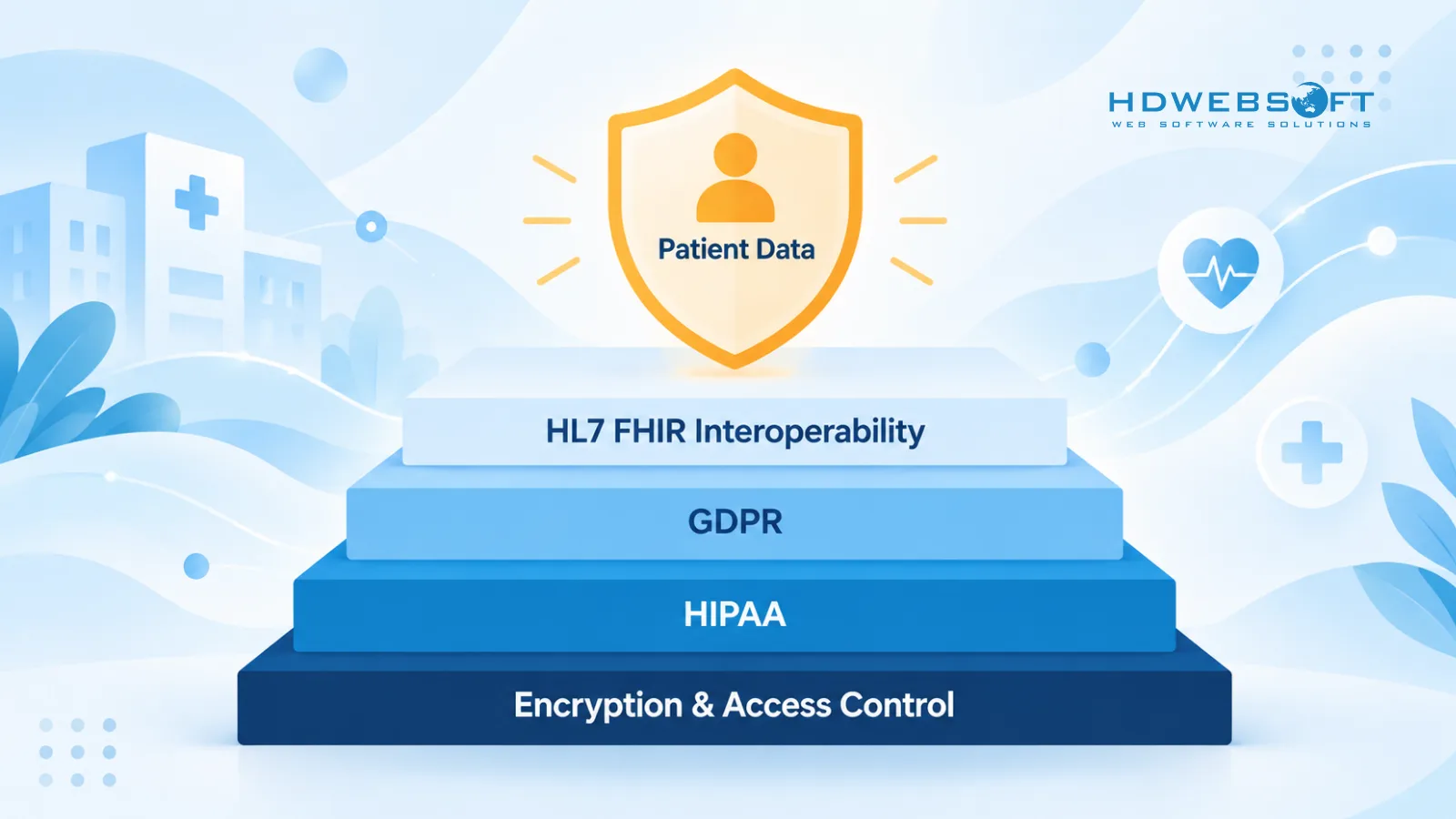
In the United States, the Health Insurance Portability and Accountability Act (HIPAA) sets the rules for protecting health information: administrative, physical, and technical safeguards covering access control, encryption, audit logging, and breach notification. Any software that stores, processes, or transmits protected health information must be designed around these requirements — including the business associate obligations that extend to the vendors building it. Organizations handling EU patient data face parallel obligations under GDPR.
Gain additional knowledge: HIPAA Compliance Software & Best Practices for Security in Healthcare
Interoperability: HL7 FHIR
Healthcare data is only useful if it can move between systems. HL7 FHIR (Fast Healthcare Interoperability Resources) has become the dominant standard for exchanging health data, defining API-based resources for patients, observations, medications, and clinical documents. Modern custom healthcare software is increasingly built FHIR-first, which simplifies integration with EHR platforms, health information exchanges, and payer systems — and keeps organizations aligned with evolving regulatory expectations around data access.
Security Beyond Compliance
Compliance sets the floor, not the ceiling. Healthcare is a top target for ransomware and data breaches, so custom software should add defense in depth: encryption in transit and at rest, role-based access control, comprehensive audit trails, and secure development practices throughout the lifecycle. For connected care models, telehealth security practices address the additional exposure that comes with remote consultations and device-generated data.
Future Trends in Healthcare Software Development
Healthcare software continues to evolve quickly. Several trends are already reshaping what organizations should expect from a new build.
Generative AI and Ambient Clinical Documentation
Generative AI has moved from experiment to production in healthcare. Ambient documentation tools listen to clinical encounters and draft notes automatically, cutting the documentation burden that drives clinician burnout. AI-assisted triage, summarization, and coding support are following the same path. Recent results show medical AI reaching human-level precision in specific diagnostic tasks — a signal of where clinical decision support is heading.
Niche-Specialty and Multi-Specialty EMR Software
Generic EMR systems increasingly give way to two divergent approaches: niche-specialty systems tailored to practices like cardiology, dermatology, or pediatrics, and multi-specialty platforms that accommodate varied practice types within one system. Custom development supports both directions — building specialty-specific workflows into a focused product, or architecting a platform that adapts across departments.
Consumer-Class User Experience in Enterprise Software
Clinicians and patients now compare healthcare software to the consumer apps they use daily. Enterprise healthcare systems are responding with genuinely usable interfaces: intuitive navigation, minimal clicks to common tasks, and mobile-first design. UX quality is no longer cosmetic — it directly affects adoption, documentation accuracy, and patient satisfaction.
Telemedicine and Connected Medical Devices
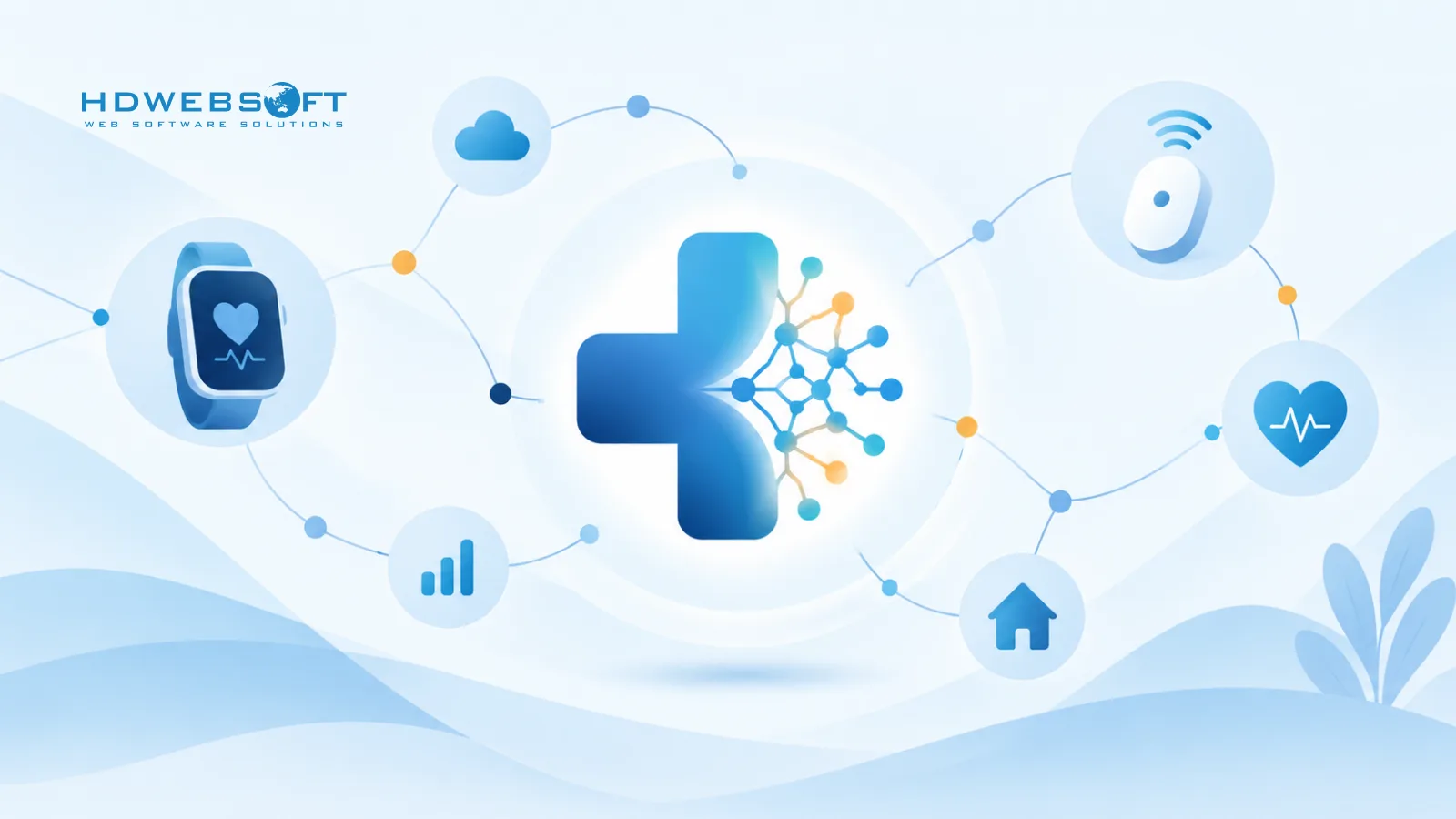
Telehealth has settled into a permanent care channel rather than a pandemic workaround, and it is merging with the Internet of Medical Things — wearables, home monitoring devices, and connected diagnostic equipment. Software that ingests device data and routes it into clinical workflows extends care beyond facility walls. For a deeper look at the access side of this shift, see how telehealth software improves healthcare accessibility.
Real-World Applications: Case Studies
Case studies show how these systems perform outside the requirements document. Two categories illustrate the range of custom healthcare software development in practice.
Electronic Health Record Software
EHR software transformed healthcare data management by centralizing patient records and enabling information exchange between providers. Custom EHR implementations go further — adapting charting, ordering, and reporting to a specific organization’s clinical workflows rather than forcing the workflow to adapt to the software. Success depends on regulatory compliance, seamless integration with existing systems, and data migration that preserves record integrity.
Urgent Care Apps
Urgent care applications compress the path from symptom to care: patients connect with providers, schedule visits, receive guidance, and in many cases complete a consultation without leaving home. Building these apps means balancing speed of access with the security controls that health data demands — plus the integration work required to write visit outcomes back into the patient’s record.
For a concrete example, our healthcare app development case study covers a patient-facing application built around real clinical workflows, and the platform for healthcare knowledge and communities case study shows how a content and community platform can be engineered for the healthcare domain.
Challenges Custom Healthcare Software Addresses
Healthcare organizations face a set of recurring challenges that generic software handles poorly. Custom development addresses them directly:
- Efficient data management — purpose-built systems streamline access to patient records, medical information, and treatment history while enforcing the compliance controls sensitive data requires.
- Personalized care delivery — custom platforms support individual care plans, remote monitoring, and patient-specific engagement rather than one-size-fits-all workflows.
- Integration of emerging technologies — AI, machine learning, and connected devices can be designed into the architecture instead of bolted on afterward.
- Data security and privacy — security controls are built to the organization’s actual risk profile, with encryption, access management, and auditability matched to regulatory obligations.
- Interoperability and data exchange — standards-based integration enables seamless information exchange across providers, payers, and systems, improving care coordination.
How to Choose a Custom Healthcare Software Development Partner
In custom healthcare software development, the partner matters as much as the platform. Healthcare projects fail most often on domain knowledge gaps, not technical skill. Evaluate candidates on:
- Domain and compliance experience — demonstrated work under HIPAA, GDPR, or equivalent frameworks; familiarity with clinical workflows, not just general software delivery.
- Interoperability expertise — hands-on HL7/FHIR implementation, EHR integration experience, and device connectivity where the project requires it.
- Delivery evidence — case studies and references in comparable scope. Relevant complexity matters more than volume of past projects.
- Security practices — secure development lifecycle, encryption standards, access control, and certifications such as ISO 9001 and ISO/IEC 27001.
- Post-launch support — maintenance, SLAs, and a plan for regulatory updates, since healthcare software is never truly finished.
For a balanced view of the build-versus-partner decision, see our breakdown of outsourcing custom healthcare solutions.
Frequently Asked Questions
What is custom healthcare software development?
Custom healthcare software development is the design, engineering, and maintenance of software built for a specific healthcare organization rather than adapted from a generic commercial product. It covers systems such as EHR/EMR platforms, telehealth applications, patient portals, remote patient monitoring, and clinical workflow tools — all built to satisfy regulatory requirements like HIPAA and interoperability standards such as HL7 FHIR.
What is the difference between custom and off-the-shelf healthcare software?
Off-the-shelf software offers standardized features at lower upfront cost but forces organizations to adapt their workflows to the product. Custom software is built around existing clinical workflows, integrates with the systems already in place, and scales with the organization — at the cost of a longer initial build and a higher upfront investment.
Which compliance standards apply to healthcare software?
In the United States, HIPAA governs the privacy and security of protected health information. Software handling EU patient data must comply with GDPR. HL7 FHIR is the dominant interoperability standard for exchanging health data between systems, and software that performs medical functions may fall under FDA regulation as Software as a Medical Device (SaMD).
How long does it take to build custom healthcare software?
Timelines depend on scope, integrations, and regulatory requirements. A focused application such as a patient portal or telehealth MVP can take a few months, while a full EHR platform or a system requiring FDA clearance typically takes a year or more. Compliance validation and integration with legacy systems are usually the biggest schedule drivers.
How much does custom healthcare software development cost?
Cost is driven by scope, compliance obligations, integration complexity, and the team model. A single-purpose application costs far less than a multi-module platform with EHR integration, device connectivity, and regulatory documentation. The most reliable way to estimate is a discovery phase that produces a scoped requirements document before development begins.
How do I choose a healthcare software development company?
Evaluate domain experience with healthcare regulations such as HIPAA and GDPR, proven interoperability expertise with HL7/FHIR and device integration, security practices including encryption and audit logging, delivery evidence through comparable case studies, and post-launch support commitments. Certifications such as ISO 9001 and ISO/IEC 27001 are strong signals of mature delivery processes.
Conclusion
Custom healthcare software development has evolved from basic record-keeping into a discipline that shapes how care is delivered, coordinated, and experienced. Patient portals and mobile apps have made engagement continuous rather than episodic; AI and ambient documentation are reducing the administrative burden on clinicians; and interoperability standards like FHIR are finally making health data portable across the systems that need it.
The organizations that benefit most are the ones that treat software as a strategic asset — choosing partners with real healthcare domain depth, building compliance into the architecture from the start, and investing in systems designed for their workflows rather than against them.
HDWEBSOFT is an ISO 9001 and ISO/IEC 27001 certified healthcare software development company with experience building patient-facing applications, clinical platforms, and healthcare integrations. If you are planning a custom healthcare software project, contact us to discuss how we can help.