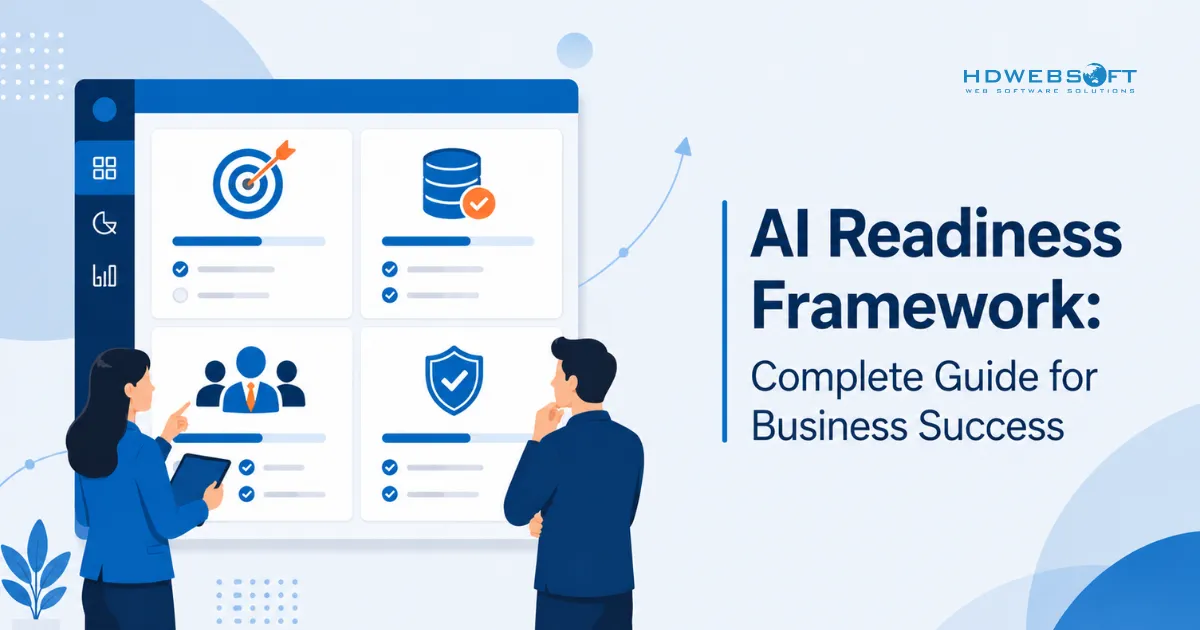
AI readiness framework is a structured assessment approach that evaluates business preparedness across multiple dimensions before AI implementation. It helps organizations understand their current capabilities, identify gaps, and create a roadmap for successful AI adoption. Without proper readiness assessment, businesses risk wasting resources on failed AI projects that don’t deliver expected value.
What AI Readiness Means for a Business
Defining AI Readiness in Business Context
AI readiness refers to how prepared an organization is to implement and benefit from artificial intelligence technologies. It goes beyond having the right technical infrastructure - it encompasses business strategy alignment, data quality, organizational culture, skills, governance, and processes. A truly AI-ready business has clarity on why they want AI, what problems it will solve, and how they’ll measure success.
Why AI Readiness Assessment Matters
Most AI projects struggle not because the technology falls short, but because organizations are unprepared to operationalize it. According to McKinsey’s State of AI survey, nearly two-thirds of organizations have yet to scale AI across the enterprise, and only 39% report measurable EBIT impact from their AI initiatives. A proper readiness assessment helps businesses avoid common pitfalls, set realistic expectations, and allocate resources effectively.
Why AI Readiness Matters Before AI Adoption
Risk Mitigation and Cost Control
AI investments can be substantial, both in terms of direct costs and opportunity costs. Readiness assessments help organizations identify potential risks early—whether related to data quality, skills gaps, governance, or unclear business objectives. This proactive approach reduces costly mid-project corrections and lowers the likelihood of failed initiatives. According to Deloitte, companies with mature AI foundations reported an average ROI of 4.3% from their AI projects, compared to just 0.2% among organizations at the beginning of their AI journey. This highlights why readiness should be viewed as a prerequisite for sustainable AI success rather than an afterthought.
Success Rate Improvement
When businesses understand their starting point, they can set realistic milestones and success metrics. AI readiness frameworks provide a baseline against which progress can be measured. This clarity improves project success rates by ensuring that initiatives are scoped appropriately, teams are prepared, and stakeholders have aligned expectations. The structured approach also helps secure executive buy-in and ongoing support.
Resource Optimization
AI readiness assessments help organizations allocate resources more effectively. Instead of spreading investments thinly across multiple uncoordinated initiatives, businesses can prioritize high-impact areas where they’re actually prepared to succeed. This might mean focusing on data quality first, or addressing skill gaps before technical implementation. Resource optimization extends beyond budget to include time, talent, and management attention.
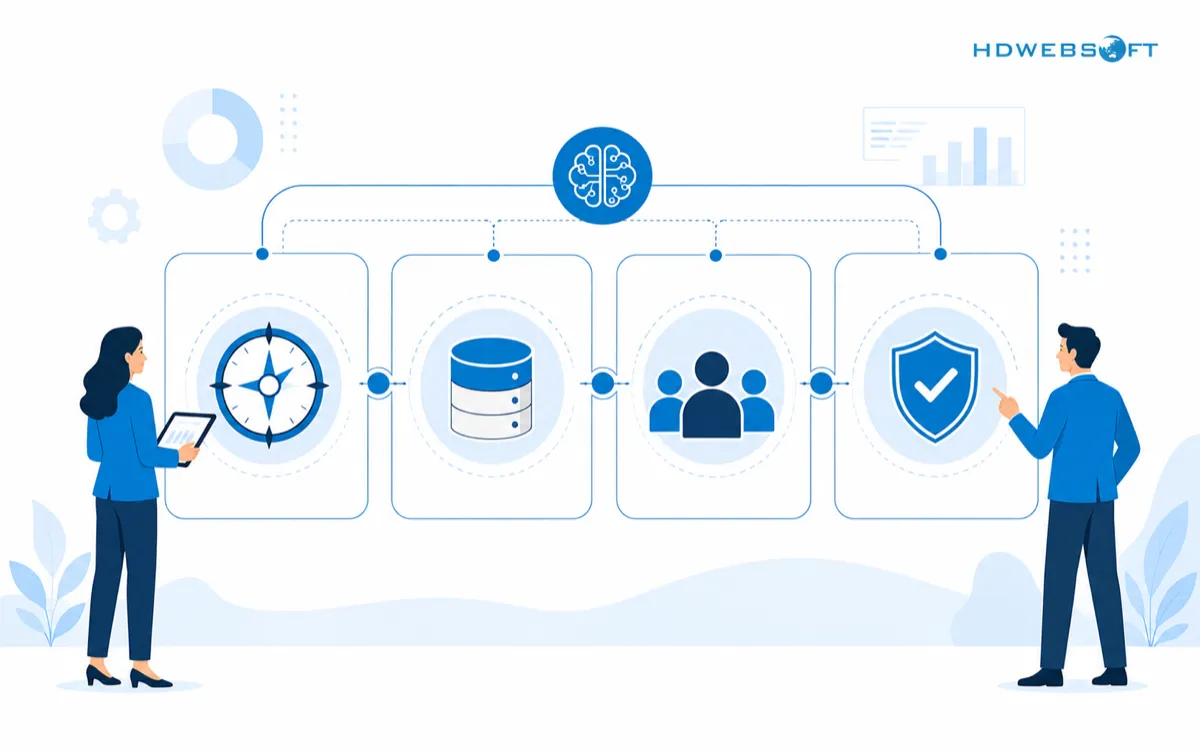
Core Dimensions of an AI Readiness Framework
Business Strategy Alignment
The foundation of AI readiness is strategic alignment. Organizations must have clear business objectives that AI can support, rather than pursuing AI for its own sake. Digital transformation can help organizations align their AI initiatives with broader business goals and ensure strategic coherence. This dimension evaluates whether the organization has identified specific use cases with measurable business value, defined success metrics, and secured executive sponsorship. It also assesses whether AI initiatives align with broader business strategy and digital transformation goals.
Data and Infrastructure Readiness
Data is the fuel for AI systems, making data readiness critical. This dimension examines data quality, availability, accessibility, and governance. It evaluates whether the organization has sufficient relevant data, whether that data is clean and structured, and whether proper data governance practices are in place. Infrastructure readiness covers technical capabilities including computing resources, cloud infrastructure, and integration capabilities with existing systems.
People and Organizational Readiness
Technology alone doesn’t drive AI success - people do. This dimension assesses whether the organization has the right skills, whether the culture supports experimentation and learning, and whether change management processes are in place. It includes evaluating existing technical skills, identifying gaps, planning training programs, and assessing leadership support for AI initiatives. Organizational readiness also considers whether teams are prepared to work differently with AI-powered tools and processes.
Governance and Compliance Readiness
As AI becomes more regulated and scrutinized, governance readiness is increasingly important. This dimension evaluates whether the organization has appropriate policies, procedures, and oversight mechanisms for AI development and deployment. It includes assessing ethical AI guidelines, compliance with relevant regulations (such as GDPR or industry-specific requirements), risk management frameworks, and accountability structures. Governance readiness ensures AI initiatives are responsible, transparent, and sustainable.
Business Alignment Before AI Implementation
Strategic Goals and AI Use Cases
Successful AI implementations start with clear business problems, not technology solutions. Organizations should identify specific pain points or opportunities where AI can create meaningful value. This might include improving operational efficiency, enhancing customer experience, enabling new products or services, or reducing risks. Each use case should have defined success metrics that tie to business KPIs. The best AI use cases are those where the organization has domain expertise, access to relevant data, and clear implementation paths.
ROI Expectations and Success Metrics
Realistic ROI expectations are crucial for AI project success. Organizations should establish baseline metrics before implementation and define what success looks like in quantifiable terms. This might include cost savings, revenue increases, efficiency gains, customer satisfaction improvements, or risk reduction. Success metrics should be measurable, achievable, and tied to business value. It’s also important to establish timelines for realizing benefits, as AI projects often have longer investment horizons than traditional IT initiatives.
Stakeholder Buy-in and Executive Sponsorship
AI initiatives require cross-functional collaboration and sustained support. Executive sponsorship ensures resources are allocated, priorities are set, and barriers are removed. Stakeholder buy-in extends beyond leadership to include end-users, IT teams, business units, and other affected groups. Effective change management communication helps build understanding and support across the organization. Without proper stakeholder alignment, even technically successful AI projects can fail to deliver business value due to lack of adoption or organizational resistance.
Data, System, and Process Readiness Overview
Data Quality and Availability
Data readiness is often the biggest bottleneck in AI implementations. Organizations need sufficient quantities of relevant data that is accurate, complete, and properly labeled. Data analytics services can help organizations assess and improve their data quality before AI implementation. Data should be accessible to the teams that need it, with appropriate governance and security controls. Common data readiness issues include siloed data sources, inconsistent data formats, missing values, poor documentation, and lack of data lineage. Addressing these issues before AI implementation prevents costly delays and ensures models are built on reliable foundations.
Technical Infrastructure and Scalability
AI workloads often require different infrastructure than traditional applications. This includes computing power for training models, storage for large datasets, and low-latency inference capabilities. Cloud infrastructure is commonly used for AI due to its scalability and managed services. Organizations should assess whether their current infrastructure can support AI workloads or if upgrades are needed. Integration capabilities with existing systems are also important - AI solutions typically need to exchange data with and augment current business processes and applications.
Process Standardization and Documentation
AI implementations work best when business processes are well-defined and documented. Standardized processes provide clear rules that AI systems can learn from and augment. Process documentation helps identify automation opportunities and ensures that AI solutions align with how work actually gets done. Organizations should assess whether key processes are documented, whether there are standard operating procedures, and whether process variations are understood. This process maturity helps ensure AI solutions address real operational needs rather than theoretical workflows.
People, Workflow, and Governance Readiness
Skills Gap Analysis and Training Needs
AI skills are in high demand and short supply. Organizations need to assess their current capabilities across multiple skill areas including data science, machine learning engineering, MLOps, domain expertise, and change management. Skills gaps can be addressed through hiring, training existing staff, or partnering with external providers. It’s important to recognize that AI readiness requires a mix of technical skills and business acumen - the ability to translate business problems into AI solutions is often the critical gap.
Change Management and Cultural Readiness
AI implementations often change how people work, which can create resistance without proper change management. Organizations should assess their culture’s appetite for experimentation, tolerance for failure, and openness to new ways of working. Change management should include communication plans, training programs, and support structures to help teams adapt to AI-powered processes. Cultural readiness also includes leadership behavior - leaders who model learning and experimentation help create environments where AI can flourish.
AI Governance Framework and Ethics
As AI systems become more prevalent, organizations need robust governance frameworks to ensure responsible development and deployment. This includes ethical guidelines for AI use, fairness and bias mitigation processes, transparency requirements, and accountability structures. Governance should address data privacy, model explainability, human oversight requirements, and ongoing monitoring. Organizations operating in regulated industries need to ensure AI initiatives comply with sector-specific requirements. Strong governance not only manages risk but also builds trust with customers, employees, and regulators.
AI Readiness Maturity Levels
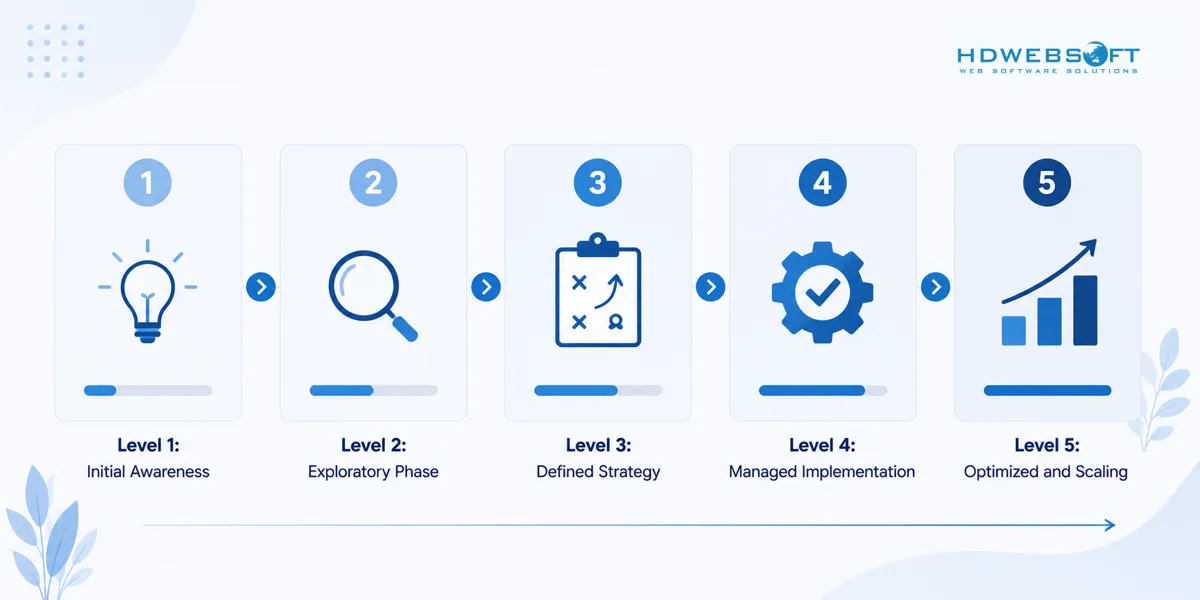
Level 1: Initial Awareness
At this level, organizations are aware of AI but have limited understanding of its potential applications or requirements. AI initiatives are typically ad-hoc, driven by individual enthusiasts rather than strategic planning. There’s minimal coordination, and knowledge is siloed. Organizations at Level 1 need education and awareness-building before they can effectively assess readiness or plan implementations.
Level 2: Exploratory Phase
Organizations at Level 2 are actively exploring AI through pilots, proof-of-concepts, or research. They’re building knowledge and understanding potential applications, but lack coordinated strategy or standardized approaches. Successes and failures are isolated rather than systematic. These organizations need to move from experimentation to strategic planning, establishing governance and identifying high-value use cases.
Level 3: Defined Strategy
Level 3 organizations have developed an AI strategy with clear business objectives and priorities. They’ve established basic governance processes and identified key use cases. Implementation is coordinated rather than ad-hoc, though capabilities may still be developing. These organizations are ready to begin systematic implementation, focusing on building foundational capabilities and delivering early wins.
Level 4: Managed Implementation
At Level 4, organizations have established AI capabilities and are implementing solutions systematically. They have mature processes for project selection, development, and deployment. Cross-functional collaboration is effective, and lessons are being captured and applied. These organizations can scale successful implementations and are working on optimizing their AI operations.
Level 5: Optimized and Scaling
Level 5 organizations have mature, optimized AI capabilities that are delivering measurable business value at scale. They have robust MLOps processes, clear governance, and continuous improvement mechanisms. AI is integrated into business operations and decision-making. These organizations are innovating with AI and exploring advanced applications while maintaining strong governance and risk management.
Signs a Business Is Ready or Not Ready for AI
Positive Readiness Indicators
Organizations ready for AI typically demonstrate clear strategic alignment, with specific business problems identified and success metrics defined. They have accessible, quality data relevant to their use cases, and technical infrastructure that can support AI workloads. Cross-functional collaboration is effective, with executive sponsorship and stakeholder buy-in. These organizations have realistic expectations, appropriate governance, and change management processes in place. They also have the right skills or realistic plans to acquire them.
Red Flags and Warning Signs
Organizations not ready for AI often pursue AI for technology’s sake rather than business value. They lack clear use cases or measurable objectives, and success is vaguely defined. Data is siloed, poorly documented, or insufficient for their needs. Technical infrastructure is inadequate or not understood. There’s minimal executive sponsorship or cross-functional collaboration. Skills gaps are significant but not addressed, and there’s resistance to change or unrealistic expectations about AI capabilities. These organizations should focus on building foundational capabilities before attempting AI implementations.
Common Mistakes in Assessing AI Readiness
Overlooking Cultural and Change Management
Many organizations focus heavily on technical and data readiness while neglecting the human side of AI adoption. Cultural readiness and change management are often the difference between success and failure. Organizations that skip this assessment often face resistance, low adoption, and failed implementations. Effective change management includes communication, training, support structures, and addressing fears about job displacement or role changes.
Underestimating Data Preparation Requirements
Data preparation is typically the most time-consuming aspect of AI implementations, yet organizations often underestimate the effort required. Data cleaning, integration, labeling, and governance can take months or even quarters. Organizations that don’t assess data readiness thoroughly encounter delays, quality issues, and models that don’t perform as expected. A comprehensive data readiness assessment should be a non-negotiable part of AI planning.
Skipping Governance and Compliance Considerations
In the rush to implement AI, organizations sometimes overlook governance and compliance requirements. This can lead to regulatory violations, ethical issues, and reputational damage. Governance should be addressed early, including data privacy, model transparency, fairness considerations, and accountability structures. Organizations in regulated industries need particular attention to compliance requirements, as retrofitting governance is difficult and expensive.
How AI Readiness Connects to Pilot, Production, and Scaling
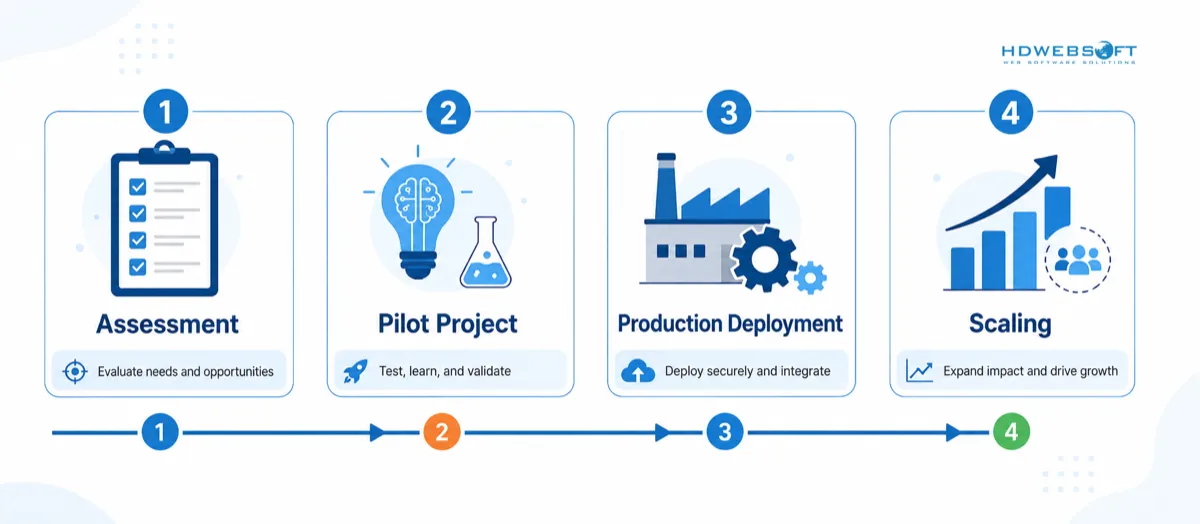
From Assessment to Pilot Projects
AI readiness assessments directly inform pilot project selection and design. Organizations should choose pilot projects that match their current maturity level and capabilities. If data readiness is low, pilots should focus on data preparation and infrastructure. If organizational readiness is the constraint, pilots might emphasize change management and capability building. The assessment helps prioritize which areas to address first and sets realistic expectations for what pilots can achieve.
Production Readiness Checklist
Moving from pilot to production requires additional readiness beyond initial assessment. Production readiness includes operational considerations like monitoring, maintenance, scalability, and integration. Organizations need MLOps capabilities to manage model lifecycle, performance monitoring, and retraining processes. The initial readiness assessment should be updated to reflect learnings from pilots, ensuring that production deployments have the right foundation for ongoing success.
Scaling AI Across the Organization
Scaling AI requires organizational readiness that goes beyond individual project success. This includes standardized processes, shared infrastructure, centralized governance, and capabilities that can be leveraged across multiple use cases. Organizations that assessed readiness holistically are better positioned to scale because they’ve built foundational capabilities that support multiple initiatives. Scaling readiness also includes change management at scale, communication strategies, and mechanisms for sharing learnings across the organization.
AI Readiness Checklist Before Starting an AI Project
Business Strategy Checklist
- Clear business problem identified with measurable impact
- AI use case aligned with strategic objectives
- Success metrics and ROI expectations defined
- Executive sponsor identified and engaged
- Stakeholder analysis completed with buy-in plan
- Realistic timeline and resource budget established
Data and Technical Checklist
- Relevant data sources identified and accessible
- Data quality assessed (completeness, accuracy, consistency)
- Data governance and security controls in place
- Technical infrastructure requirements defined
- Integration needs with existing systems documented
- Scalability considerations addressed
People and Process Checklist
- Skills gap analysis completed across technical and business teams
- Training and hiring plans developed for identified gaps
- Change management plan in place
- Key processes documented and standardized
- Cross-functional team structure defined
- Communication plan for organizational awareness and support
Governance and Risk Checklist
- AI governance framework established
- Ethical guidelines and fairness considerations addressed
- Compliance requirements identified and addressed
- Risk assessment completed with mitigation plans
- Model monitoring and maintenance processes defined
- Accountability and decision-making structures clear
Conclusion
AI readiness framework provides the foundation for successful AI implementation by ensuring organizations are prepared across strategy, data, people, and governance dimensions. Skipping readiness assessment is a common cause of AI project failure, while thorough preparation significantly improves success rates and ROI. Organizations should approach AI as a business transformation initiative, not just a technology project, investing the time and resources needed to build genuine readiness.
The journey to AI readiness is ongoing - as capabilities mature and business needs evolve, organizations should continuously assess and improve their readiness. Starting with an honest assessment of current state, addressing foundational gaps, and scaling systematically allows organizations to build sustainable AI capabilities that deliver real business value.
If you’re considering AI implementation for your business, HDWEBSOFT can help assess your readiness and develop a roadmap tailored to your specific needs and objectives. Our AI development services span technical implementation, organizational change management, and strategic alignment to ensure your AI initiatives succeed.
Key Takeaways
AI readiness framework assesses business preparedness across strategy, data, people, and governance dimensions. Maturity levels help organizations understand their current AI adoption stage and next steps. Proper readiness assessment significantly reduces AI project failure rates and implementation costs. Data quality, organizational culture, and governance are critical success factors often overlooked. A structured checklist approach ensures comprehensive evaluation before AI investment. Organizations should align AI initiatives with clear business objectives rather than pursuing technology for its own sake.
FAQ
What is an AI readiness framework and why does my business need one?
An AI readiness framework is a structured assessment approach that evaluates how prepared your organization is to implement and benefit from AI technologies across multiple dimensions including strategy, data, people, and governance. Your business needs one because most AI projects fail due to poor preparation, not technical limitations. A readiness assessment helps identify gaps, set realistic expectations, allocate resources effectively, and significantly improve the likelihood of successful AI implementation.
How long does it take to complete an AI readiness assessment?
The timeline varies based on organization size and complexity, but typically ranges from 4-8 weeks for a comprehensive assessment. This includes data collection, stakeholder interviews, technical evaluation, skills analysis, and governance review. Smaller organizations with simpler needs might complete assessments in 2-4 weeks, while large enterprises with multiple business units and complex regulatory environments might require 8-12 weeks. The investment in assessment time pays dividends through improved project success rates and more efficient resource allocation.
What are the key components of AI readiness for small businesses?
Small businesses should focus on the same core dimensions as larger organizations but with appropriate scale: clear business alignment (specific problems AI will solve), data readiness (even small datasets need to be quality and accessible), basic skills (either through training or partnerships), and simple governance (data privacy, ethical considerations). Small businesses can often move faster by focusing on practical, high-impact use cases and leveraging cloud-based AI services rather than building custom solutions. The key is being realistic about capabilities and starting with well-defined pilot projects.
Can AI readiness frameworks be customized for different industries?
Yes, AI readiness frameworks should be customized for different industries to address sector-specific requirements, regulations, and use cases. Healthcare organizations need emphasis on data privacy, regulatory compliance, and clinical validation. Financial services require strong governance, risk management, and explainability. Manufacturing might focus on operational technology integration and sensor data quality. Retail organizations emphasize customer data and personalization capabilities. The core dimensions remain consistent, but the specific assessment criteria and priorities vary by industry context and regulatory environment.
What are the signs that a company is not ready for AI implementation?
Key warning signs include pursuing AI for technology’s sake rather than solving specific business problems, lack of clear success metrics or ROI expectations, executive sponsorship only at a superficial level, data that is siloed or poorly documented, significant skills gaps with no plan to address them, resistance to change within the organization, and unrealistic expectations about AI capabilities or timeline. Companies showing these signs should focus on building foundational capabilities before attempting AI implementations, starting with education, stakeholder alignment, and addressing the most critical gaps.
How does AI readiness differ from digital transformation readiness?
AI readiness is a subset of digital transformation readiness with specific additional requirements. While digital transformation readiness focuses on general technology adoption, process change, and organizational agility, AI readiness adds specific considerations around data quality and quantity, machine learning skills, model governance and ethics, algorithmic transparency, and MLOps capabilities. Organizations that are digitally mature may still lack AI-specific readiness around data science talent, model lifecycle management, or AI governance. AI readiness assessments build on digital transformation foundations but evaluate the unique requirements of machine learning and AI systems.