AI has evolved far beyond basic question-and-answer systems. Now, AI agents are reaching a level where they can perform tasks with human-like efficiency, especially when deployed as part of a multi-agent system. Moreover, these AI-driven agents have outgrown traditional virtual assistants like Siri and Alexa, demonstrating remarkable potential across various fields. From accelerating drug discovery in healthcare to enhancing fraud detection in finance, AI continues to push boundaries and redefine industries.
To maintain a competitive edge, enhance customer engagement, and boost revenue, businesses must embrace this game-changing technology. But the real challenge is: How to build an AI agent?
Keep reading, and you’ll discover the answer in just a few minutes.
What is an AI Agent?
So, what is an AI agent? The answer is simple. An AI agents are software programs that can operate independently to carry out tasks without needing constant human supervision. They make decisions based on established rules and the data they process. Some of these agents work in a straightforward, rule-based way to manage repetitive tasks. Meanwhile, more advanced ones use machine learning to improve and adapt their performance over time.
According to recent 2025 studies:
- 52% of executives report their organizations are actively using AI agents
- 51% of companies have already deployed AI agents, with another 35% planning to deploy within the next two years
- Nearly 60% of companies have AI agents in production right now
- 96% of respondents plan to expand their use of AI agents in the next 12 months
Notably, AI-driven agents provide considerable advantages across different sectors, as discussed in our previous blogs. However, their success largely hinges on crucial elements like system design, data quality, and the algorithms’ effectiveness that power them.
What are the Main Components of an AI Agent Architecture?
Before we dive into AI agent development, it’s important to understand the main components that shape one’s architecture. Artificial intelligence agents operate in various environments to accomplish specific goals. Despite their differences, they all share essential components that define how they work.
Architecture
First of all, the architecture acts as the foundation of an AI agent, providing the necessary framework for its operation. It can be a physical entity, a software-based system, or a combination of both. For example, a robotic AI agent includes elements like sensors, actuators, motors, and robotic arms. In contrast, a software-based AI agent relies on text commands, APIs, and databases to function independently.
Operator Function
Secondly, the operator function dictates how an agent processes the data it collects to perform actions that align with its goals. When developing this function, designers consider factors such as the type of data being used and the AI capabilities. Plus, they also take into account its knowledge base, feedback loops, and supporting technologies.
Agent Program
Last but not least, agent programming involves creating and implementing the operator function within a specific architecture. This process includes coding, training, and optimizing the AI agent to ensure its performance meets business logic and technical requirements. By doing this, the agent can operate effectively and fulfill performance expectations.
Two Main Approaches to AI Agent Development
When it comes to building AI agents, there are two primary approaches: creating one from scratch or leveraging an existing framework. The right choice depends on factors such as budget, development timeline, and the level of customization required.
Developing an AI Agent from Scratch
Building an AI agent from scratch allows for complete customization, ensuring it aligns perfectly with your business’s unique requirements. This method is ideal for those needing a highly specialized solution.
However, it requires extensive knowledge of machine learning and software development. Additionally, the process can be both time-intensive and resource-demanding.
Crafting your AI agent from the ground up is an approach to how to build an AI agent that aligns perfectly with your needs.
Advantages:✔ Full control over design and functionality
✔ Custom-built to fit specific business needs
✔ Complete ownership of the AI model and system
Challenges:✖ Requires deep technical expertise
✖ Longer development time and higher resource investment
Best suited for: Organizations with strong AI development capabilities, a flexible budget, and requirements that off-the-shelf solutions cannot fulfill.
Utilizing Pre-Built Frameworks
For a more efficient approach to AI agent development, businesses can take advantage of existing AI development frameworks. These platforms provide pre-configured components, reducing the complexity of building an AI agent. Many of them integrate advanced language models to enhance functionality.
On the contrary, using pre-built frameworks is also a choice when wondering how to build an AI agent.
Some widely used frameworks include:
- Microsoft Autogen – Designed for smooth collaboration and simplified AI agent creation.
- LangChain – An open-source solution offering a modular structure for agent development.
- LlamaIndex – Optimized for sophisticated information retrieval tasks.
- crewAI – A paid platform equipped with ready-to-use tools for building AI assistants.
Advantages:✔ Accelerated development process with built-in tools
✔ Lower technical barriers
✔ Cost-effective compared to building from scratch
✔ Access to powerful language models
Challenges:✖ Reliance on third-party platforms
Best suited for: Businesses with limited AI expertise, tight deadlines, or those seeking a cost-effective and less customized solution. This option is also ideal for companies experimenting with AI without committing to a significant upfront investment.
How many types of AI agents are there?
When exploring AI agent development, organizations develop and deploy various intelligent agents, each designed for specific functions. Below are some key examples:
Simple Reflex Agents
These agents function based on predefined rules and immediate inputs, responding only to specific event-condition-action triggers. Since they cannot assess past events or learn from experience, they’re best suited for straightforward tasks that require minimal processing. For instance, a simple reflex agent can be programmed to recognize certain keywords in a user’s request and automatically initiate a password reset.

In case you’re wondering, simple reflex artificial intelligence agents are adopted for… resetting your password automatically.
Model-Based Reflex Agents
Unlike simple reflex agents, model-based agents have a more advanced decision-making process. Moreover, they construct an internal representation of their environment, allowing them to evaluate different outcomes before acting.
Leveraging stored information and real-time data, these agents make more informed decisions rather than simply following fixed rules. For example, machine learning prediction models used in model-based agents can forecast future scenarios, enabling proactive decision-making.
Goal-Based Agents
Also known as rule-based agents, these AI systems are designed to achieve specific objectives in mind. Instead of merely reacting to conditions, they assess multiple approaches and select the most efficient path to reach a desired outcome.
This capability makes them well-suited for complex tasks, such as NLP and robotics applications, where strategic decision-making is essential. When exploring AI agent development, understanding goal-based agents can help in designing systems that prioritize efficiency and adaptability.
Utility-Based Agents
Going beyond goal-oriented decision-making, utility-based agents consider various potential scenarios and their associated benefits. They use advanced inference algorithms to compare different options and choose the most favorable one based on utility values. A practical example would be a travel booking assistant that prioritizes the shortest flight duration over ticket price when helping a user find flights.
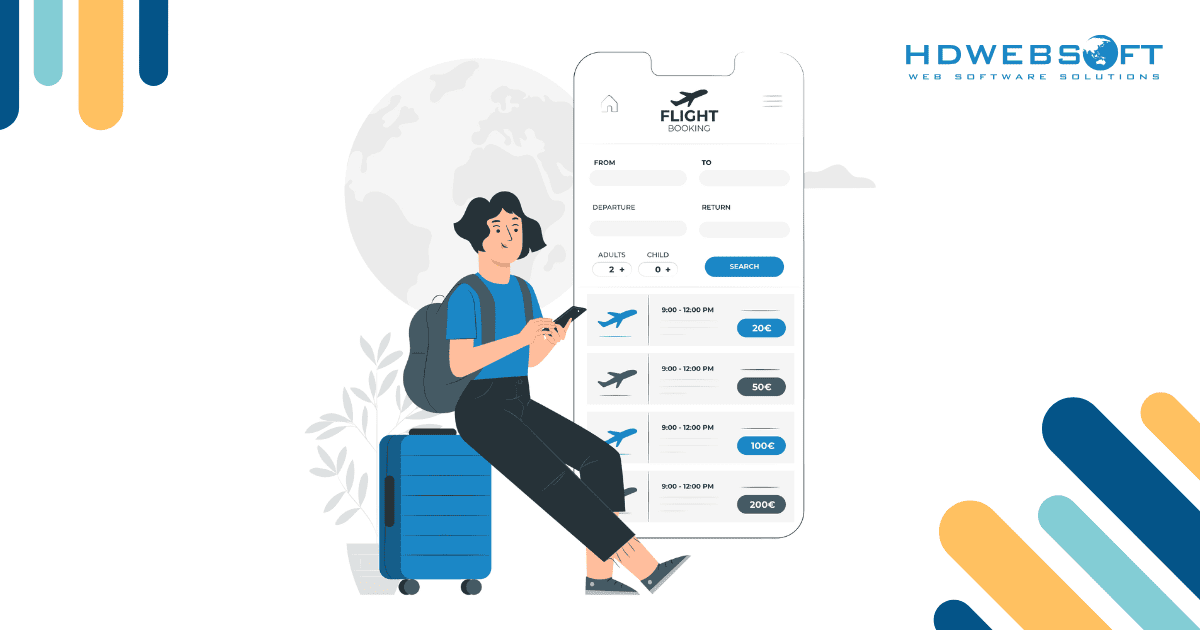
Finding the best flight is now so easy with the help of utility-based AI agents.
Learning Agents
This type of agent improves its performance over time by continuously learning from past experiences. Using sensory input and feedback mechanisms, it refines its responses and adapts to changing conditions. Additionally, learning agents often employ problem generators to create new training scenarios, allowing them to enhance their decision-making abilities autonomously.
Hierarchical Agents
Hierarchical agents operate within a structured system where higher-level agents delegate complex tasks to lower-level agents. Each lower-level agent handles a specific subtask independently, reporting progress to its supervisor. The higher-level agents then coordinate these efforts to ensure that the overall objective is met efficiently. This multi-tiered approach enables better organization and scalability in AI systems. For enterprises managing multiple agents, understanding multi-agent systems can help optimize coordination and scalability.
Will AI Replace Developers in the Near Future?
How to Build an AI Agent in 7 Simple Steps
Creating an AI agent from the ground up might seem overwhelming. However, breaking the process into clear, manageable steps can make it much more approachable. Let’s take a look at these 7 simple steps for AI agent development.
Step 1: Define the Agent’s Purpose and Scope
To create a custom AI agent, start by clearly defining its purpose and objectives. This involves determining the specific tasks and functions the agent will handle.
Here are key questions to refine your goals:
- For what purposes will the AI agent be deployed? Will it categorize documents, analyze customer interactions, handle inquiries, generate insights from data, or serve another function?
- Which goal takes priority? Are you looking to enhance efficiency, improve customer support, or automate repetitive workflows?
- Upon which data repositories will the agent depend? Consider whether it will use structured database records, unstructured email content, or real-time inputs from IoT devices.
- How much independence should the agent have? Will it operate autonomously, or will human oversight be required for decision-making?
- Which ethical and regulatory considerations demand attention? Ensure your AI is ethical and complies with industry guidelines and legal requirements.
If defining the agent’s role and scope feels overwhelming, it’ll be beneficial to collaborate with an AI consulting firm. It can provide valuable insights and streamline the development process.
Step 2: Build Your Development Team
As you move forward with AI agent development, the next step is assembling a skilled team to develop and train it. The expertise of your team members will directly impact the choice of technologies and tools used throughout the process. Typically, the key roles required include:
- Machine Learning Engineer – Designs and implements AI models.
- Data Scientist – Analyzes and processes data for training.
- Software Engineer – Develops the overall system architecture.
- UI/UX Designer – Ensures a smooth user experience.
- DevOps Engineer – Manages deployment and scalability.
A good development team is an excellent asset to your company. They can guide your business and teams on how to build an AI agent properly.
You can either build an in-house team or outsource these roles based on your needs. If your company has a limited budget, a small internal workforce, or lacks certain specialized skills, outsourcing can be a cost-effective and efficient alternative.
Maybe you haven’t read: The Ultimate AI Consulting Partner for Business Success!
Step 3: Collect, Process, and Prepare Training Data
Data serves as the backbone of any AI agent, making accuracy, relevance, and fairness essential for optimal performance. To build a reliable AI agent, consider gathering data from various sources, such as:
- Internal sources: Business records, customer details, and operational logs.
- External sources: Purchased datasets, third-party providers, or publicly available information.
- User-generated content: Social media activity, product reviews, and website interactions.
After collecting the data, the next crucial step is cleaning and preprocessing it. High-quality data is the foundation for training an effective AI agent. This process includes correcting errors, addressing missing values, and maintaining consistency. Ultimately, the purpose is to ensure the model learns from accurate and structured information. For detailed guidance on model development, check out our guide on how to make an AI model.
Step 4: Choosing the Right AI Technology and Tools
The next crucial part of AI agent development is selecting the appropriate technologies and tools that align with your agent’s purpose, data, and overall requirements. This process involves several key considerations:
Define Your AI Agent’s Needs
Let’s begin by identifying the specific functions your AI agent must perform. Whether it involves language processing, image recognition, or decision-making, each task requires a different set of technologies.
Analyze AI Technologies
- Machine Learning Frameworks: Select a framework that suits your project’s complexity and your team’s expertise. TensorFlow, PyTorch, and scikit-learn are popular choices. For comprehensive machine learning development services, consider partnering with experienced teams. Alternatively, consider machine learning as a service for cloud-based ML solutions.
- Natural Language Processing: If your AI agent will process human language, consider libraries like spaCy, NLTK, or Hugging Face Transformers. Advanced NLP solutions can significantly enhance your agent’s language understanding capabilities.
- Computer Vision: For handling image-based tasks, OpenCV and Keras (with pre-trained models) are excellent options.
Decide on Deployment Strategies
- On-Premise vs. Cloud: Cloud platforms such as AWS, Google Cloud, and Microsoft Azure offer scalability, but security concerns may arise. On-premise solutions provide greater control but require additional infrastructure.
- Edge Computing: For AI applications demanding real-time data processing, edge computing ensures computations happen closer to the data source, reducing latency.
Select Development Tools
- Integrated Development Environments (IDEs):** Choose an IDE that enhances coding efficiency and debugging.
- Data Management Tools: For data storage and pipeline management, solutions like MongoDB and Apache Kafka can be valuable.
When selecting tools, prioritize those with strong community support and extensive documentation. After all, ensuring compatibility with your existing tech stack will also contribute to a smoother development process.
Step 5: Designing Your AI Agent
At this stage, you will create the blueprint for your AI agent, determining how it will function and carry out its tasks. A well-planned design is crucial for ensuring efficiency and adaptability. Understanding AI agent development requires careful consideration of its architecture, key functionalities, data flow, and decision-making processes.
Choose the Right Agent Architecture
The architecture defines how your AI agent is structured and operates. Selecting an appropriate type of AI improves performance, scalability, and maintenance. You can opt for:
- Modular Design: Develop different components separately and integrate them later. This method simplifies updates, debugging, and scalability since modifications to one module do not impact others.
- Concurrent Design: Implement a system where multiple processes run simultaneously. Consequently, this approach is ideal for agents handling real-time tasks, such as managing several customer interactions at once.
Define Core Functionalities
In order to make sure that your artificial intelligence agent performs effectively, outline its essential functions:
- Primary tasks: Identify core operations, such as data collection, processing, decision-making, and response generation (e.g., recommendations or classifications).
- User interactions: Determine how users will engage with the agent, whether through chatbots, graphical interfaces, or API integrations.
- Feedback systems: Implement mechanisms that allow the agent to learn from user interactions and improve performance over time. This is particularly important in reinforcement learning models.
Plan the Data Flow
Managing data effectively is critical for an AI agent’s performance. Structure your agent’s data handling as follows:
- Input processing: Define how data will be received, including accepted formats and preprocessing requirements.
- Processing logic: Establish the steps the agent will follow to analyze data and generate meaningful outputs.
- Output delivery: Specify how results, such as classifications, predictions, or decisions, will be communicated to users or other systems.
Develop Decision-Making Strategies
Decision-making is at the core of an AI agent’s functionality. To optimize this process:
- Algorithm selection: Choose suitable algorithms based on task complexity, ranging from decision trees to deep learning models.
- Policy framework: If using reinforcement learning, define the policies or rules that will shape the agent’s behavior over time.
By carefully designing each aspect, you can build a well-structured AI agent that meets your business needs while remaining scalable and efficient.
Blueprinting your AI agents takes effort and requires great attention to detail.
Step 6: Developing the AI Agent
After finalizing the design, the next crucial step in AI agent development is transforming the concept into a functional system. This phase involves coding, integration, and rigorous testing to ensure the agent operates as intended. Once built, proper AI agent integration becomes essential for enterprise deployment.
Implementing Core Features
You shall begin by coding the AI agent’s fundamental capabilities, ensuring they align with the design specifications outlined in the previous step. If you’re using a modular architecture, divide the system into smaller, independent components that can be developed, tested, and updated separately. Each module should serve a distinct function before being integrated into the full system.
Integrating External Systems
Once the core functionalities are in place, the next step is to connect the AI agent to external systems necessary for its operation. This includes:
- API Integration: Link the agent to external APIs to access real-time data or additional functionalities.
- Database Implementation: Set up databases to store critical information. These can include user interactions, operational logs, and preferences, ensuring smooth data retrieval and processing.
Enabling Learning and Adaptation
So as to enhance the AI agent’s intelligence and adaptability, it’s essential to incorporate machine learning and memory mechanisms:
- Machine Learning: Implement chosen frameworks to enable the agent to learn from data, whether through supervised or unsupervised learning models. This allows it to refine its responses over time.
- Memory Systems: Equip the agent with memory mechanisms to retain previous interactions and user preferences. Additionally, utilizing databases or in-memory storage can help personalize the agent’s responses, making it more effective.
Testing and Debugging
Thorough testing is critical to ensuring the AI agent functions correctly and efficiently:
- Unit Testing: Validate that individual components work as expected before integration.
- Integration Testing: Assess how different modules interact, ensuring seamless communication between components like the user interface and decision-making logic.
- Performance Testing: Evaluate the agent’s response time, accuracy, and stability under different conditions to identify potential bottlenecks or failures.
Step 7: Deploy and Monitor Your AI Agent
Once the AI agent has been fully developed and tested, the next step is deployment in a real-world environment.
Before launching, however, it’s crucial to set up a testing environment that closely replicates the production system. This ensures that the agent operates effectively under real conditions without unexpected failures.
As to facilitate a smooth transition, consider deployment strategies such as gradual rollouts, blue-green deployment, or canary releases. These methods help minimize disruptions to existing systems. Initially, it’s advisable to release the MVP AI agent to a limited group of users. This will allow you to gather feedback and fine-tune its performance before a full-scale launch.
Post-deployment, continuous monitoring is also vital. Tracking key metrics such as response time, accuracy, and user experience helps assess performance. Regularly collecting user feedback enables ongoing improvements, ensuring the agent remains effective and reliable. Additionally, frequent updates are necessary to refine features, fix bugs, and strengthen security.
Frequently Asked Questions
What is the difference between an AI agent and a traditional chatbot?
AI agents are more advanced than traditional chatbots. While chatbots typically follow pre-defined scripts and decision trees, AI agents can learn, adapt, and make autonomous decisions based on data and context. AI agents can handle complex tasks, integrate with multiple systems, and improve over time through machine learning, whereas chatbots are limited to specific conversation flows.
How long does it take to build an AI agent?
The timeline for building an AI agent varies significantly based on complexity and approach. Using pre-built frameworks like LangChain or Microsoft Autogen can take 4-12 weeks for basic implementations. Building from scratch with custom architecture typically requires 3-6 months for development, testing, and deployment. Enterprise-grade AI agents with advanced capabilities may take 6-12 months or longer.
What skills are needed to build an AI agent?
Building an AI agent requires a multidisciplinary team with skills in machine learning, data science, software engineering, and often domain expertise. Key roles include machine learning engineers, data scientists, software architects, DevOps engineers, and UI/UX designers. Knowledge of programming languages like Python, frameworks like TensorFlow or PyTorch, and experience with cloud platforms are also essential.
What are the costs associated with AI agent development?
Costs vary widely based on complexity and development approach. Using pre-built frameworks can range from $20,000-$100,000 for basic implementations. Custom AI agent development typically costs $100,000-$500,000+ depending on features, integration requirements, and ongoing maintenance. According to recent research, 40% of companies have a $1 million+ budget for AI agent initiatives, including software, cloud services, and staffing. Additional costs include cloud infrastructure, data storage, monitoring tools, and continuous updates.
Can small businesses build AI agents, or is it only for large enterprises?
Small businesses can absolutely build AI agents, especially using pre-built frameworks and no-code/low-code platforms. Many AI agent frameworks are designed to be accessible to organizations with limited technical resources. Small businesses often start with simple AI agents for specific tasks like customer support or data analysis, then scale up as they gain experience and see ROI.
Final Thought
Developing an AI agent involves multiple stages, from planning and implementation to deployment and ongoing refinement. Success depends on various aspects and considerations in the development process. Regardless of the chosen development path, understanding AI agent development is crucial for maximizing its benefits.
If you’re looking for expert guidance in AI, HDWEBSOFT is a trusted partner with extensive experience building intelligent solutions. As a leading AI development firm, we provide tailored services to help businesses navigate the complexities of AI implementation. Contact us now and make your vision a reality.