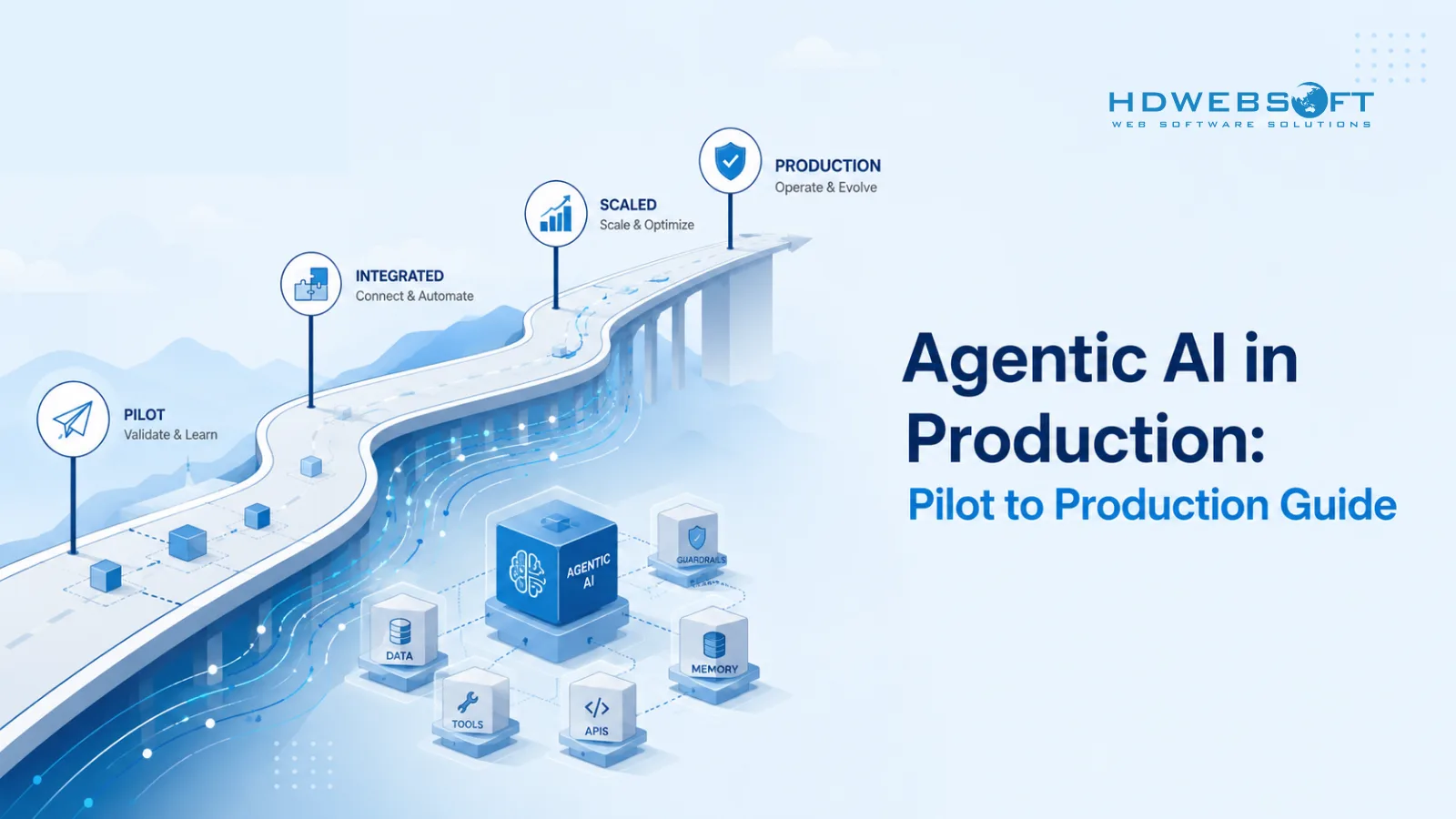
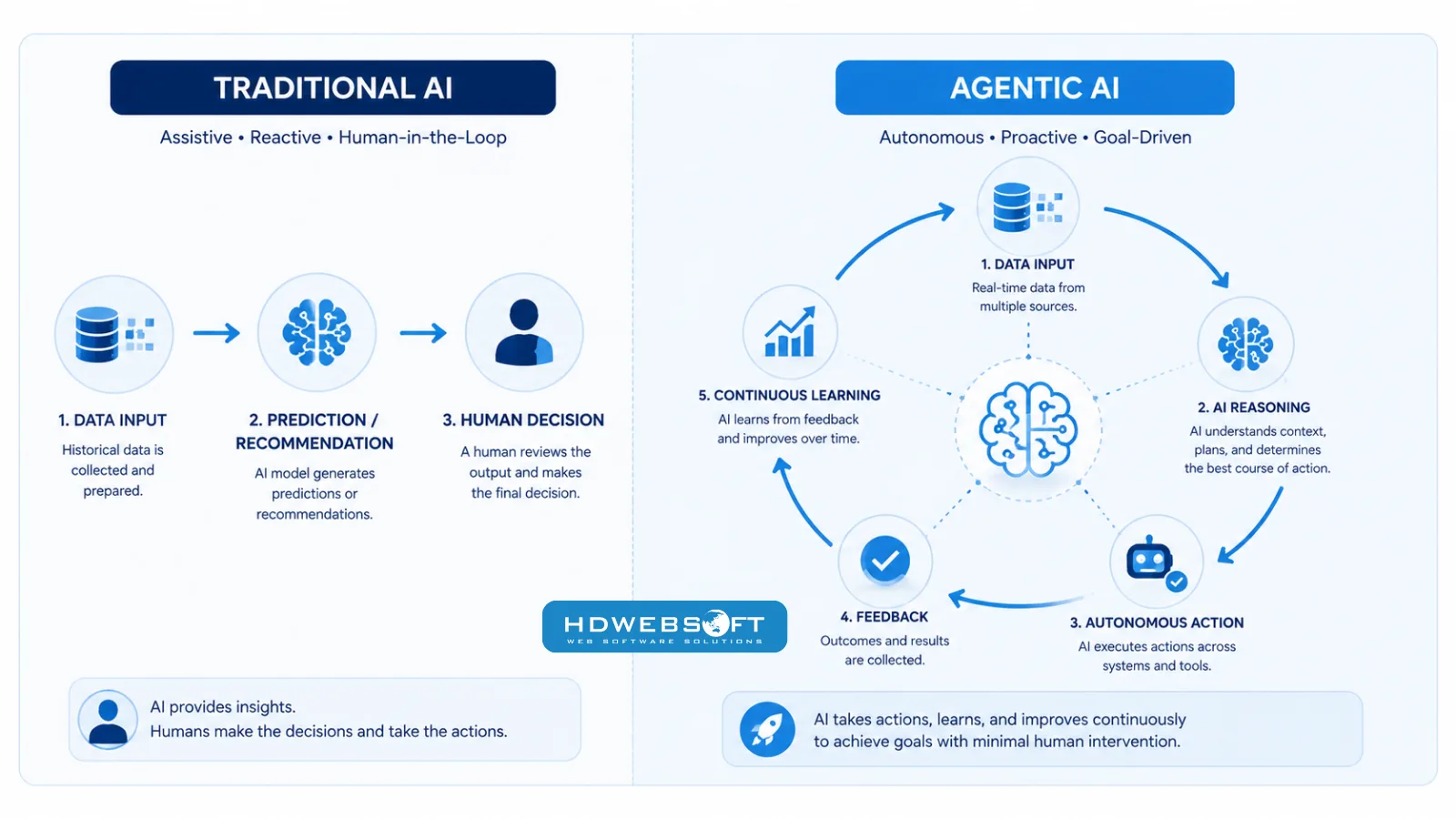
Agentic AI in production represents the next evolution of artificial intelligence - autonomous systems that can reason, plan, and execute tasks with minimal human intervention. Unlike traditional AI that provides predictions or recommendations, agentic AI takes independent actions to achieve specific goals. While many organizations have successfully launched pilot projects, few have successfully deployed these systems in production environments. The gap between pilot and production continues to widen as organizations struggle with safety requirements, observability challenges, and cost management complexities.
The 2026 Agentic AI Landscape
The current state of agentic AI adoption shows a clear divide between experimentation and production deployment. Organizations across industries are investing heavily in pilot projects, but the transition to production remains challenging. Market trends indicate that 2026 is becoming a tipping point where agentic AI moves from experimental labs to mission-critical business operations. However, most organizations lack the production infrastructure and expertise needed to make this transition successfully. According to McKinsey’s AI research, the gap between AI pilots and production deployment remains a significant challenge for enterprises.
Definition of Agentic AI in Production
Agentic AI in production refers to autonomous AI systems that can reason, plan, and execute tasks with minimal human intervention while operating in production environments. These systems differ from traditional AI in several key ways:
- Autonomy: Agentic AI can make decisions and take actions without constant human oversight
- Goal-directed behavior: Systems work toward specific objectives rather than just providing outputs
- Tool use: AI agents can interact with external systems, APIs, and databases to complete tasks
- Production requirements: Must maintain reliability, safety, and scalability at scale
Real-world applications include customer service agents that resolve issues autonomously, supply chain systems that optimize logistics in real-time, and financial systems that execute trades based on market conditions. Each requires robust guardrails, observability, and safety infrastructure to operate reliably in production.
Why Most Pilots Fail to Reach Production
Most agentic AI pilots fail to reach production not because the technology doesn’t work, but because organizations underestimate production requirements. Common failure points include:
- Technical gaps: Missing guardrails, inadequate observability, and insufficient testing infrastructure
- Organizational challenges: Skill gaps in production engineering, unclear ownership, and lack of cross-functional alignment
- Budget constraints: Unexpected infrastructure costs and ongoing operational expenses
- Safety and compliance concerns: Inadequate risk mitigation and regulatory alignment
- Underestimation of complexity: Production deployment requires significantly more robust engineering than pilot development
Organizations that treat pilots as experiments rather than production prototypes rarely succeed in scaling. The most successful teams design for production from the start, building in safety infrastructure, monitoring capabilities, and financial controls as core requirements rather than afterthoughts.
Build vs Buy vs Outsource: Strategic Decision Framework
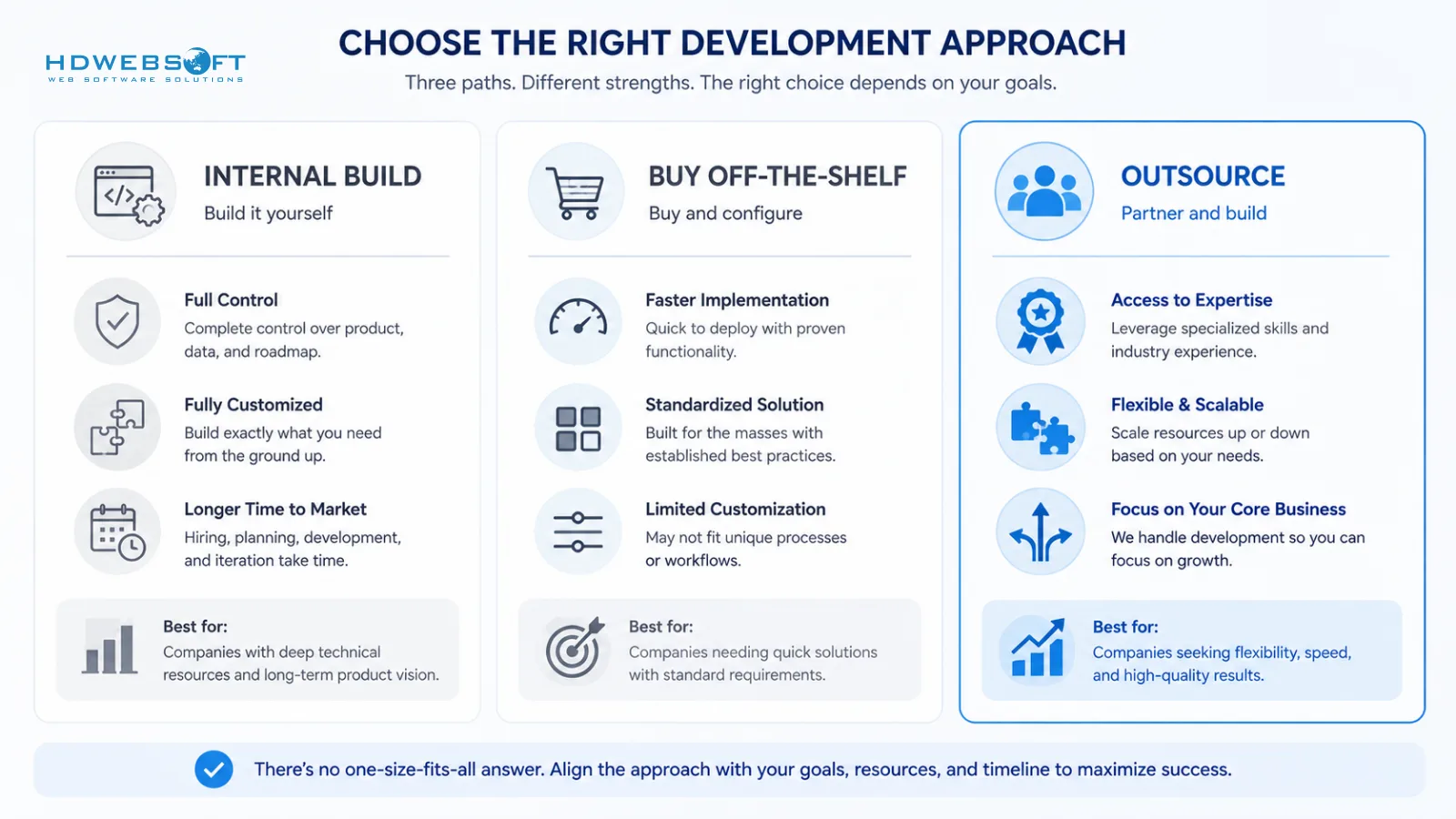
Choosing the right development approach for agentic AI in production requires careful consideration of organizational context, strategic goals, and available resources. No single approach works for every situation - the best choice depends on your organization’s technical maturity, timeline, and strategic priorities.
When Internal Development Makes Sense
Internal development of custom AI application development makes sense for organizations with:
- Strong existing AI/ML teams with production experience
- Long-term strategic differentiation through AI capabilities
- Sufficient budget and timeline for internal investment
- Regulatory requirements demanding full control over systems and data
However, internal build requires significant investment in hiring, training, and infrastructure. Organizations must be prepared for longer development timelines and higher initial costs in exchange for greater control and potential long-term strategic advantage.
When Agentic AI Development Outsourcing Makes Sense
Agentic AI development outsourcing provides strategic advantages when organizations:
- Need specialized expertise not available in-house
- Have faster time-to-market requirements
- Want cost optimization through flexible engagement models
- Need access to production-grade infrastructure and patterns
- Prefer risk sharing with experienced partners
Outsourcing can accelerate production deployment by providing ready expertise and proven delivery patterns. Experienced partners bring production infrastructure, testing frameworks, and operational knowledge that would take years to build internally. This approach is particularly valuable for organizations where AI is important but not a core competency.
Hybrid Approaches for Maximum Flexibility
Hybrid models offer the best of both worlds - external expertise for initial deployment with internal team development for long-term sustainability. Common approaches include:
- Co-development: Internal and external teams collaborate on design and implementation
- Staff augmentation: External experts join internal teams to fill skill gaps
- Knowledge transfer: External partners deliver systems while training internal teams
- Gradual transition: External-led initial deployment with increasing internal ownership over time
These models work well for organizations building internal capabilities while delivering immediate business value through custom AI application development.
Vendor Checklist: Selecting the Right Agentic AI Development Partner
Selecting the right partner for agentic AI development outsourcing requires careful evaluation of technical capabilities, production experience, and organizational fit. The cost of choosing the wrong partner extends far beyond development fees - failed production deployments can damage business operations and customer trust.
Technical Capabilities Assessment
Technical evaluation should focus on production-relevant capabilities:
- LLM orchestration and RAG implementation: Experience with retrieval-augmented generation, prompt engineering, and multi-agent coordination. Teams evaluating this area should understand agentic RAG architecture, including retrieval orchestration, evaluation, grounding, and production operations. The LangChain documentation provides comprehensive guidance on production-ready orchestration patterns.
- Tool calling and integration: Proven ability to integrate with external systems, APIs, and databases securely
- Evaluation and testing frameworks: Comprehensive approaches to validate agent behavior and performance
- Cloud deployment experience: Expertise with AWS, GCP, Azure, or your preferred cloud platform
- Secure system integration: Experience with enterprise security requirements, data protection, and compliance
- Scalability and performance optimization: Track record of building systems that perform under production load
Technical capabilities go beyond AI knowledge - production deployment requires full-stack engineering expertise including orchestration, evaluation, and secure integration. Our AI development services encompass these production-ready capabilities.
Guardrails and Safety Infrastructure Evaluation
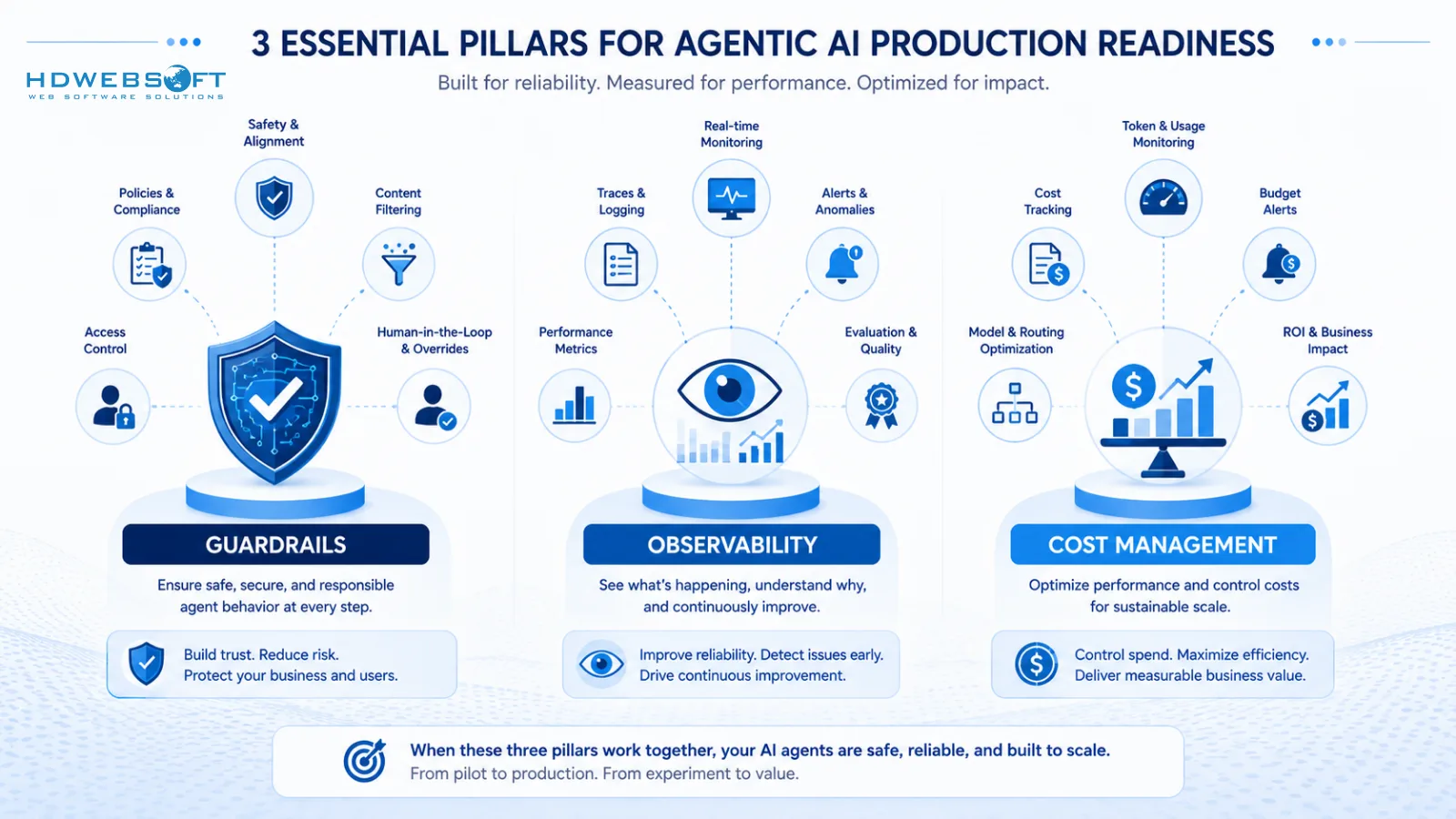
Guardrails and safety infrastructure are critical components. They are not optional - they are production requirements that differentiate experienced partners from experimental teams. Essential evaluation criteria include:
- Testing frameworks and validation methodologies: Automated testing, continuous validation, and comprehensive test coverage
- Human-in-the-loop implementation patterns: Clear processes for human oversight and intervention when needed
- Fail-safe mechanisms and rollback procedures: Robust error handling and recovery procedures
- Bias detection and mitigation approaches: Systematic approaches to identify and address bias in agent behavior
- Regulatory compliance experience: Familiarity with relevant regulations and compliance requirements. The NIST AI Risk Management Framework provides authoritative guidance on AI safety and governance.
Partners who build guardrails into the architecture from the start, rather than adding them as afterthoughts, are significantly more likely to deliver successful production deployments.
Observability and Monitoring Requirements
Observability is non-negotiable in production - you cannot manage what you cannot measure. Key capabilities to evaluate include:
- Real-time monitoring dashboards and alerts: Comprehensive visibility into system performance and agent behavior
- Logging and audit trail capabilities: Detailed logs of agent decisions, actions, and outcomes
- Debugging tools for agent behavior analysis: Ability to understand and troubleshoot complex agent interactions
- Performance tracking and optimization: Systems to monitor and optimize performance over time
- Anomaly detection and response procedures: Automated detection of unusual behavior and clear response processes
Without robust observability, production issues become impossible to diagnose and resolve, leading to extended outages and degraded performance.
Cost Structure and Transparency
Cost transparency matters more than low prices - predictable costs enable better business planning. Evaluate partners on:
- Clear pricing models: Well-defined pricing structures (fixed, time & materials, outcome-based) with no hidden fees
- Infrastructure cost estimation and management: Accurate forecasting of cloud infrastructure costs and optimization strategies
- Ongoing maintenance and support costs: Clear understanding of long-term operational expenses
- Scalability cost projections: Realistic estimates of how costs will scale with usage
- Hidden cost identification and mitigation: Proactive identification and mitigation of potential hidden costs
Partners who provide transparent cost structures and help optimize total cost of ownership deliver more value than those with the lowest development fees.
HDWEBSOFT Delivery Pattern for Agentic AI in Production
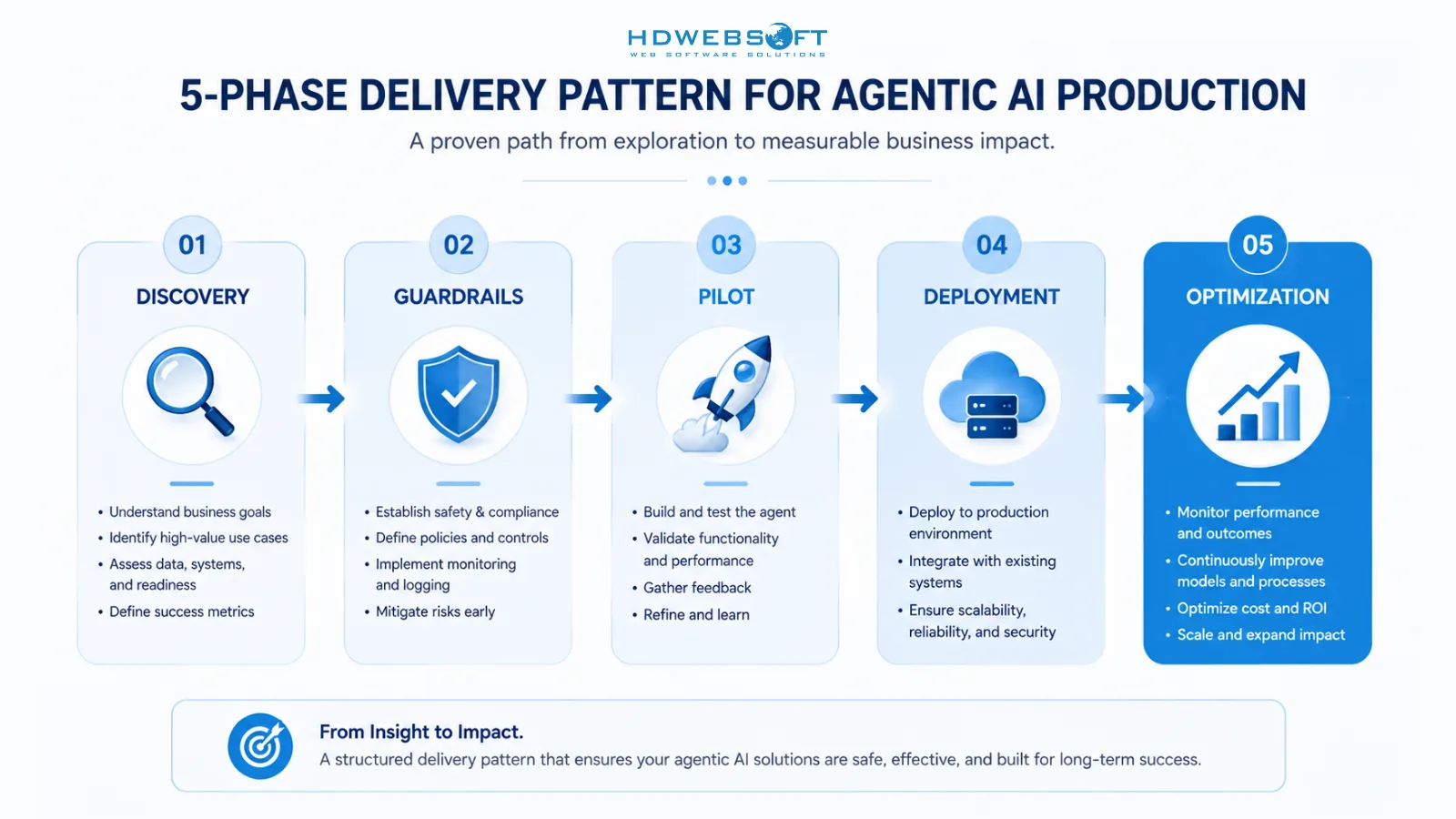
HDWEBSOFT’s delivery pattern emphasizes production-grade development from the start, helping organizations navigate the pilot-to-production transition. Our phased approach integrates safety infrastructure, monitoring capabilities, and financial controls throughout the development process, rather than treating them as add-ons.
Phase 1: Discovery and Architecture Design
Discovery focuses on production requirements, not just pilot functionality - this prevents downstream rework. Key activities include:
- Requirements gathering and use case definition: Clear understanding of business objectives, success criteria, and constraints
- Technical architecture design for production deployment: Scalable, secure architecture designed for production from day one
- Risk assessment and mitigation planning: Proactive identification and mitigation of technical, operational, and business risks
- Success metrics and KPI definition: Clear, measurable metrics for success across technical and business dimensions
- Timeline and resource planning: Realistic planning based on production requirements, not pilot complexity
By designing for production from the start, we avoid the common pitfall of having to rebuild systems when moving from pilot to production.
Phase 2: Guardrails and Safety Implementation
Guardrails are implemented from the start, not added as an afterthought. This phase includes:
- Safety framework design and implementation: Comprehensive safety architecture aligned with business requirements
- Testing infrastructure setup: Automated testing, validation frameworks, and continuous integration
- Human-in-the-loop process design: Clear processes for human oversight and intervention
- Compliance and regulatory alignment: Alignment with relevant regulations and compliance requirements
- Risk mitigation strategies: Proactive approaches to identify and mitigate risks
Building guardrails into the architecture from the start significantly reduces the risk of production issues and regulatory problems.
Phase 3: Pilot Development and Testing
Pilot development follows production standards - no “throwaway code” or shortcuts. This phase emphasizes:
- Agile development with production-grade code quality: Code quality standards appropriate for production systems
- Continuous testing and validation: Ongoing testing and validation throughout development
- Performance optimization and scalability testing: Testing under realistic production conditions
- User acceptance testing and feedback integration: Regular feedback loops with stakeholders
- Production readiness assessment: Comprehensive evaluation of readiness for production deployment
By maintaining production standards throughout pilot development, we eliminate the need for major rework when moving to production.
Phase 4: Production Deployment and Observability
Production deployment is controlled and measured, not a “big bang” launch. Key activities include:
- Gradual rollout strategy: Canary deployments, blue-green deployments, or phased rollouts to minimize risk
- Monitoring and alerting configuration: Comprehensive monitoring and alerting configured before launch
- Performance baseline establishment: Clear performance baselines to measure against
- Incident response procedures: Documented and tested procedures for handling incidents
- Documentation and handover: Comprehensive documentation and knowledge transfer
Controlled deployment with robust observability enables quick detection and resolution of issues, minimizing production impact.
Phase 5: Continuous Optimization and Cost Management
Production is the beginning, not the end - continuous optimization ensures long-term success. This phase includes:
- Performance monitoring and optimization: Ongoing monitoring and optimization of system performance
- Cost tracking and optimization strategies: Continuous monitoring and optimization of infrastructure and operational costs
- Feature enhancement and scaling support: Support for adding features and scaling the system
- Knowledge transfer and team enablement: Training and enablement of internal teams
- Long-term partnership model: Ongoing support and partnership for long-term success
Continuous optimization ensures that the system continues to deliver value and improve over time.
Key Production Success Factors
Success depends on organizational readiness and production mindset, not just technology choices. Organizations that succeed with agentic AI in production share several key characteristics.
Organizational Readiness Assessment
Honest assessment of readiness prevents costly mid-course corrections. Key areas to evaluate include:
- Technical team capabilities and gaps: Assessment of existing skills and identification of gaps
- Infrastructure and data readiness: Evaluation of infrastructure and data readiness for production deployment
- Budget and resource availability: Clear understanding of budget and resource requirements
- Risk tolerance and compliance requirements: Assessment of risk tolerance and compliance requirements
- Timeline and business urgency: Realistic assessment of timeline and business urgency
Organizations that conduct thorough readiness assessments are better prepared for the challenges of production deployment.
Production-First Mindset
Production-first mindset reduces the pilot-to-production gap by addressing production requirements early. Key elements include:
- Designing for scalability, reliability, and maintainability: Architecture designed for production from the start
- Building observability and guardrails into architecture: Observability and guardrails as core architectural components
- Planning for failure modes and recovery: Proactive planning for failure modes and recovery procedures
- Documentation and knowledge management: Comprehensive documentation and knowledge management practices
- Team structure for ongoing operations: Team structure designed for ongoing operations and maintenance
Organizations with a production-first mindset are significantly more likely to succeed in deploying agentic AI in production.
Incremental Scaling Strategy
Incremental scaling reduces risk and enables learning-based optimization. Effective approaches include:
- Start with focused, high-value use cases: Begin with focused, high-value use cases where success is most likely
- Define clear success metrics for each phase: Clear, measurable success metrics for each phase of deployment
- Expand gradually based on proven results: Gradual expansion based on proven results and lessons learned
- Maintain quality and safety standards during scale: Maintenance of quality and safety standards during scaling
- Plan for organizational learning and adaptation: Planning for organizational learning and adaptation throughout the process
Incremental scaling enables organizations to learn and adapt based on real-world experience, reducing risk and improving outcomes.
Conclusion
Agentic AI in production is achievable with the right approach and partners. Production readiness requires investment in safety infrastructure, monitoring capabilities, and financial controls - most pilots fail because organizations underestimate these requirements. Vendor selection should prioritize production experience over low prices, as the cost of failure in production can be significant.
HDWEBSOFT offers proven delivery patterns for successful deployment, with a phased approach that emphasizes production-grade development from discovery through optimization. The organizations that succeed with agentic AI in production are those that plan for production from the start and choose partners with proven track records.
For organizations ready to move forward, the next steps include assessing organizational readiness, defining clear success metrics, and selecting a partner with production experience in agentic AI development. Contact us for AI consulting services to discuss your production deployment strategy.
Key Takeaways
- Agentic AI in production requires specialized infrastructure for guardrails, observability, and cost control - most pilots fail because organizations underestimate these requirements
- The gap between pilot and production is widening in 2026 as organizations struggle with safety, scalability, and cost management challenges
- Agentic AI development outsourcing provides access to production expertise and proven delivery patterns that can help navigate the pilot-to-production transition
- Vendor selection should prioritize production experience, guardrails expertise, and cost transparency over low development prices
- Custom AI application development requires production-first mindset - designing for scalability, reliability, and maintainability from the start
- HDWEBSOFT’s phased delivery pattern emphasizes production-grade development from discovery through optimization
- Success depends on organizational readiness, executive sponsorship, and cross-functional alignment - not just technology choices
FAQ
What is agentic AI in production and how does it differ from traditional AI?
Agentic AI in production refers to autonomous AI systems that can reason, plan, and execute tasks with minimal human intervention while operating in production environments. Unlike traditional AI that provides predictions or recommendations, agentic AI takes independent actions to achieve goals, requiring robust guardrails, observability, and safety infrastructure for reliable operation.
How long does it take to move from agentic AI pilot to production?
Timeline varies significantly based on complexity, organizational readiness, and use case requirements. Simple implementations may deploy in a few months, while complex systems can take a year or more. Agentic AI development outsourcing can help accelerate timelines by providing access to proven delivery patterns and specialized expertise, though the exact acceleration depends on the specific context.
What are the main cost drivers in agentic AI development?
Primary cost drivers include infrastructure (compute, storage, networking), development team expertise, guardrails and testing infrastructure, observability and monitoring tools, and ongoing maintenance. Custom AI application development costs scale with complexity and production requirements. Organizations should budget for both initial development and ongoing operational costs.
Why do most agentic AI pilots fail to reach production?
Most pilots fail due to inadequate production readiness: missing guardrails and safety infrastructure, insufficient observability for debugging, unclear business objectives, skill gaps in production engineering, and budget constraints from unexpected infrastructure requirements. Organizations that treat pilots as experiments rather than production prototypes rarely succeed in scaling.
What guardrails are essential for agentic AI in production?
Essential guardrails include human-in-the-loop approval for critical actions, automated testing and validation, fail-safe mechanisms with rollback procedures, bias detection and mitigation, compliance monitoring, and clear audit trails. These must be designed from the start, not added as afterthoughts - experienced agentic AI development partners build guardrails into the architecture.
How do I choose the right partner for agentic AI development outsourcing?
Evaluate partners based on production experience (not just pilot projects), guardrails expertise, observability stack capabilities, cost transparency, security certifications, and team seniority. Request case studies of deployed systems and references from clients with similar use cases. The lowest-cost provider often lacks production experience - the cost of failure in production can be significant.
When should we choose internal development vs outsourcing for agentic AI?
Internal development makes sense for organizations with strong AI/ML teams, sufficient budget and timeline, and AI as core strategic differentiation. Agentic AI development outsourcing is better when you need specialized expertise, faster time-to-market, cost optimization, or access to production-grade infrastructure. Hybrid models work well for organizations building internal capabilities while delivering immediate business value.