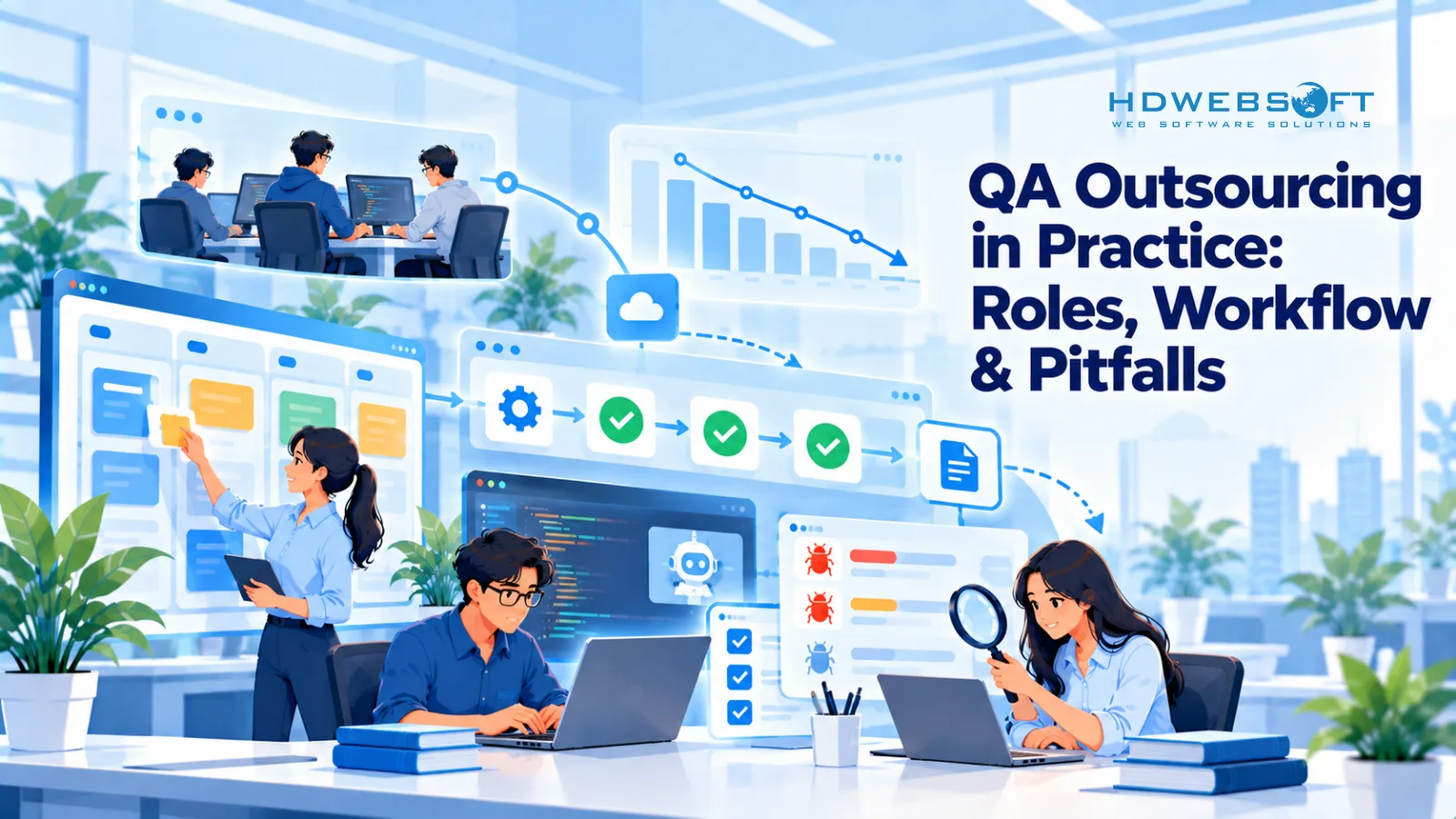
A QA outsourcing contract is easy to sign and hard to run. The gap between a testing vendor’s sales deck and a functioning outsourced QA function is filled with operating details: who does what on the team, how work flows day to day, and which failure modes to design out before they appear. This guide covers the practice side — team roles, daily workflow, and the problems that actually break engagements.
If you are still weighing whether outsourcing QA pays off at all — the benefits, costs, and engagement models — start with our guide to QA outsourcing benefits. This article picks up where that one ends: what the practice looks like once you have decided.
How an Outsourced QA Engagement Actually Runs
Most engagements follow the same five-stage arc, whether the team is two testers or twenty.

1. Onboarding and knowledge transfer. The QA team absorbs your product: user flows, architecture diagrams, existing test assets, and the defect history that shows where the system usually breaks. A good provider drives this phase with structured questions rather than waiting for documentation you may not have. Expect one to three weeks depending on product complexity.
2. Test strategy and planning. The QA lead turns requirements into a test plan: what gets tested, in what order of risk, with which techniques — manual exploration, automation, performance, or security testing. This is also where acceptance criteria get pressure-tested. Ambiguous requirements surface here, while they are still cheap to fix.
3. Execution in your sprint cadence. QA plugs into your delivery rhythm — sprint planning, standups, and reviews — rather than working as a separate silo. Test design runs alongside development; execution happens continuously as features land, not in a compressed end-of-sprint crunch.
4. Reporting and visibility. Coverage, defect counts by severity, escape rate, and automation ratio land in shared dashboards. The reporting layer is what turns “the vendor says they tested” into verifiable fact.
5. Release and post-release support. Go/no-go confidence reporting before launch, then regression and smoke coverage after it. For one-off engagements this is the handoff point; for ongoing ones, the cycle repeats with accumulated product knowledge compounding each sprint.
Two checkpoints reveal whether an engagement will work long before the first release: the end of onboarding — can the QA team already write a defect report your developers trust? — and the first automated regression run — does the suite actually execute inside your CI pipeline, or is it still a document? If either answer is no, fix the operating model before scaling the team.
Key Roles in an Outsourced QA Team
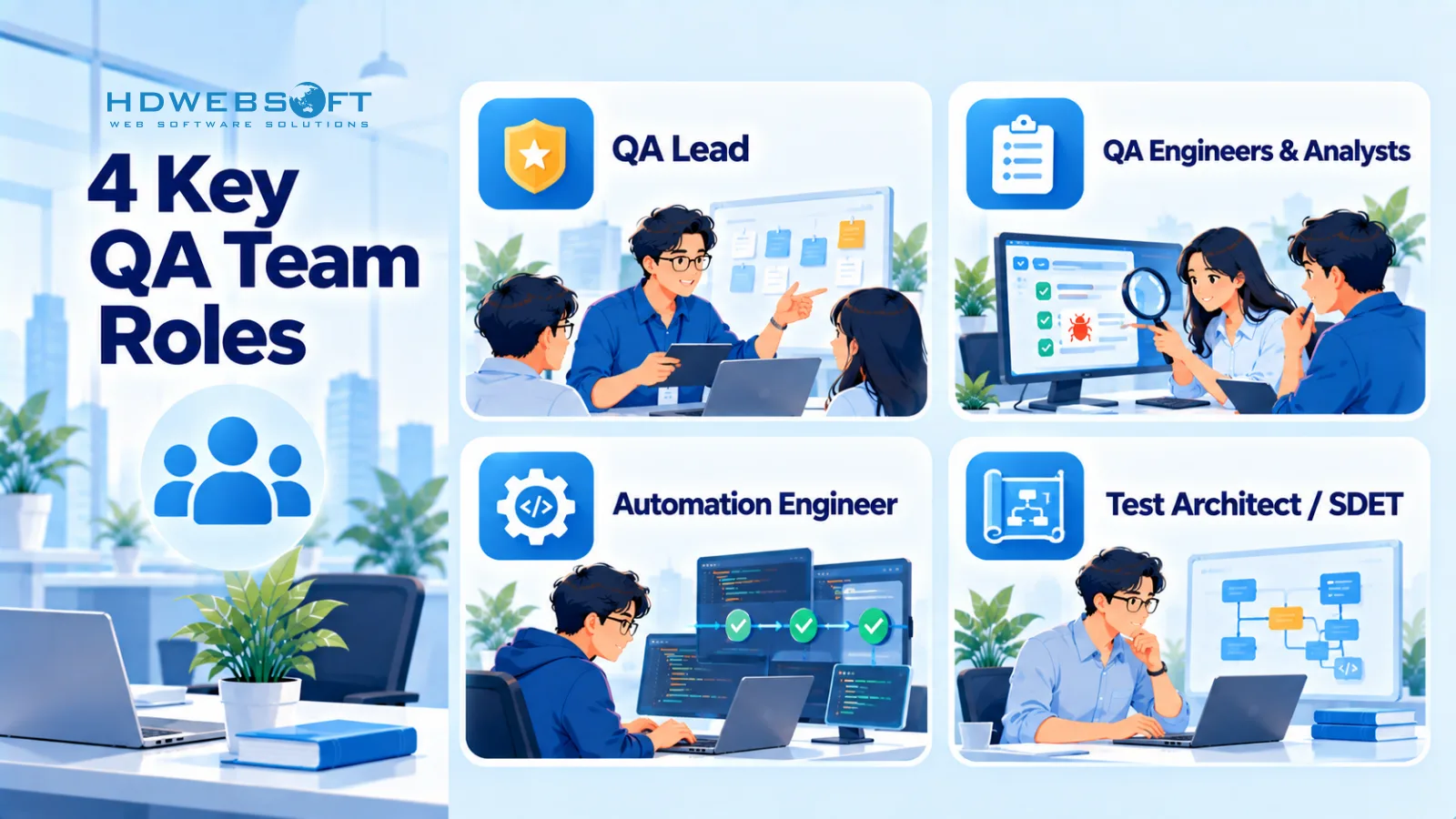
Role structure varies by engagement size, but four capabilities matter in every serious setup.
QA Lead
One person owns the testing outcome: strategy, prioritization, reporting, and escalation. The QA lead is your single point of accountability — the person who says “this release is not ready” and can defend it with data. On small engagements this role folds into a senior engineer; on anything beyond a few testers it must be explicit.
Manual QA Engineers and Test Analysts
Test analysts handle the analytical work — reviewing requirements, designing test cases, mapping coverage against risk. QA engineers execute: exploratory sessions, scripted regression, defect logging, fix verification. On small teams one person does both; on larger ones the split lets design and execution run in parallel. (The analyst/engineer distinction follows the ISTQB certification model, the standard reference for testing role definitions.)
Test Automation Engineer
The role that did not exist in old-school QA outsourcing — and the one that decides whether your testing costs fall or rise over time. Automation engineers build and maintain the regression suite, wire it into CI/CD, and keep it green. Without this role, every sprint adds manual regression debt.
Test Architect / SDET
The most senior technical role: owns the testing framework, test infrastructure, and the automation architecture itself — environments, data management, tooling choices. You need one when the product is complex enough that the test stack is an engineering project in its own right, not when you just need more manual hands.
How those roles combine depends on engagement size:
| Setup | Typical composition | Works best when |
|---|---|---|
| Solo tester | One senior QA engineer covering lead + manual duties | Early products, narrow scope, first outsourcing trial |
| Small team (2–4) | QA lead + manual engineers + shared automation help | Steady releases, growing regression load |
| Mid-size (5–10) | Dedicated lead, analysts, automation engineers, architect on demand | Multiple teams or platforms, automation-first regression |
| Augmented individuals | Engineers placed inside your existing QA structure | You already have QA leadership and need capacity, not management |
What Good Day-to-Day Operation Looks Like
A healthy outsourced QA function is boring to watch. The signals to look for:

- QA joins your ceremonies. Testers attend sprint planning and refinement, not just a weekly status call. They ask “how will we test this?” while features are still being shaped.
- Defects flow through one system. Bugs land in your tracker with severity, reproduction steps, and environment data — not in chat messages or spreadsheets.
- Reporting is push, not pull. Coverage and defect dashboards update continuously. You never have to ask what was tested last sprint.
- Escalation has a path. When quality and schedule collide, there is a named escalation route — QA lead to delivery manager to your side — rather than a silent compromise.
- Knowledge lives in shared systems. Test cases, environment guides, and known-issues registers sit in tools you control. If the vendor walked away tomorrow, the test assets stay.
If your engagement misses several of these, the problem is operational, not contractual — and it will show up in the defect rate before it shows up in a status report.
Common Problems — and How to Prevent Them
Most QA outsourcing failures trace to six recurring causes. Each has a working prevention mechanism.
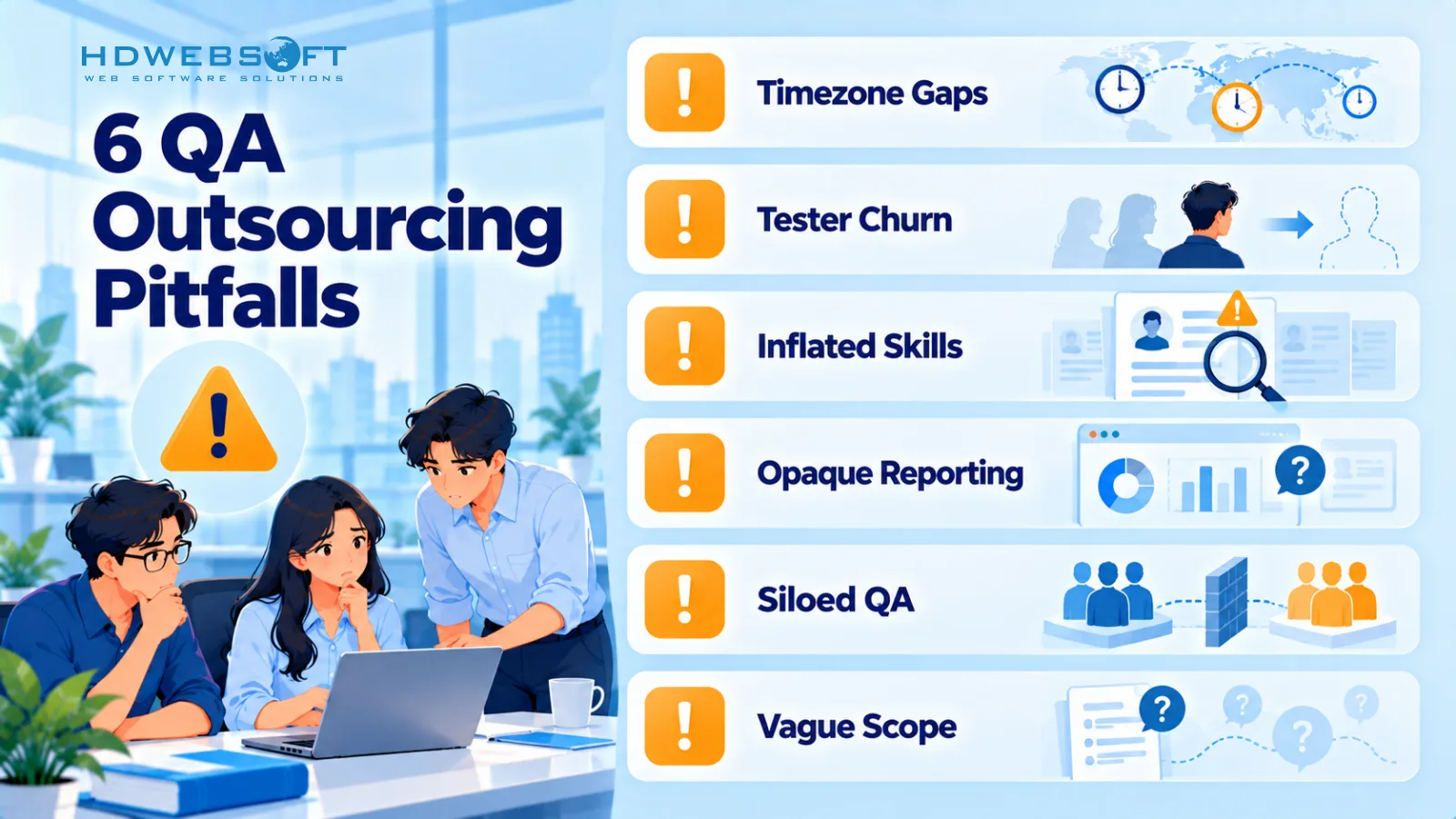
Communication gaps across time zones. Overlapping hours plus async discipline solve most of it: defect reports written to be answerable without a meeting, standup notes in writing, decisions logged where everyone can see them. What does not work is hoping chat volume substitutes for process.
Tester churn erasing project knowledge. Testing knowledge accumulates in people, and vendor attrition silently drains it. Prevention is contractual and procedural: a named roster, notice periods for key roles, and living documentation that survives any individual departure.
Skill claims that do not survive a sprint. “Senior automation engineer” on a CV can mean very different things. The reliable check is a paid pilot: two to four weeks of real work that exposes tooling skill, communication quality, and actual output before you commit.
Opaque reporting. If you cannot see coverage and defects, you are renting trust, not buying QA. Require dashboard access as a delivery artifact, not a favor — and treat its absence as a red flag, not an oversight.
Outsourced silo. A QA team that never talks to developers produces tickets, not quality. Build QA into the delivery rhythm — planning, refinement, reviews — so testing shapes the work instead of auditing it afterward.
Vague scope. “Test the app” is not a scope. Without an explicit list of covered platforms, test types, and out-of-scope items, the vendor assumes less than you expect — and you discover the gap the day a browser or environment nobody tested breaks in production.
These are the QA-specific versions of broader outsourcing failure modes. Why IT outsourcing fails covers the wider picture — misaligned incentives, scope drift, and governance gaps — that sits underneath them.
Making the Model Work Long-Term
The practices above only hold if the contract backs them. The terms that matter most for QA engagements: defect severity definitions, response and fix-verification times, coverage expectations, reporting cadence, and the continuity clauses that keep key testers on your account.
Structure those terms into the agreement rather than relying on goodwill — our software outsourcing contract guide covers the SLA mechanics that make quality commitments enforceable.
Why HDWEBSOFT for Outsourced QA
14 years of delivery across 750 projects have shaped a QA practice built around the operating details in this guide: named roles, shared dashboards, automation-first regression, and documentation that stays yours.
Our QA specialists work as a dedicated unit or embedded inside your team through software testing services — and where QA is part of a broader build, our software outsourcing services cover the full delivery lifecycle.
Frequently Asked Questions
What roles make up an outsourced QA team?
A typical outsourced QA team includes a QA lead who owns strategy and reporting, manual QA engineers or test analysts who design and execute test cases, test automation engineers who build and maintain the automation suite, and a test architect or SDET who owns the testing framework and infrastructure. Smaller engagements often combine roles — one senior engineer can cover lead and automation duties.
What is the difference between a QA engineer and a test analyst?
A test analyst focuses on the analytical side: reviewing requirements, designing test cases, and identifying what needs coverage. A QA engineer focuses on execution: running tests, logging defects, and verifying fixes. In practice many testers do both, but on larger engagements the split lets analysis and execution happen in parallel.
How do outsourced QA teams report progress?
Good teams report through shared dashboards showing test coverage, defect counts by severity, escape rate, and automation ratio — plus written summaries on a fixed cadence, typically per sprint. You should be able to see what was tested and what was found without asking.
What is the difference between a dedicated QA team and QA staff augmentation?
A dedicated QA team operates as a self-managed unit with its own lead, owning testing outcomes end to end. Staff augmentation places individual QA engineers inside your existing team and management structure. Choose dedicated when you want the provider to own results; choose augmentation when you have QA leadership in-house so you mostly need extra hands.
How do you prevent knowledge loss with an outsourced QA team?
Require living documentation — test cases, environment guides, and known-issues registers kept in shared systems you control, not in the vendor’s private tools. Rotate no single point of knowledge: pair test design with automation review, and keep a written handover package current enough that a replacement engineer can onboard in days, not weeks.
What are the most common problems in QA outsourcing?
The recurring ones are communication gaps across time zones, tester churn erasing project knowledge, skill claims that do not survive a real sprint, and opaque reporting that hides what was actually tested. Each is preventable with overlap windows, named rosters with continuity terms, a paid pilot phase, and dashboard-level visibility into coverage and defects.
Conclusion

QA outsourcing succeeds or fails on operating details, not contract signatures. The engagements that work have named roles with clear accountability, QA embedded in the delivery rhythm, transparent reporting you can verify, and documentation that outlives any individual tester. The failure modes — churn, opacity, siloed testing — are all preventable if you design for them upfront.
If you are ready to run it well, contact HDWEBSOFT to discuss what a QA engagement would look like for your product.