NFT Market Trends to Look Out In 2026
The NFT market has moved well past the speculative art boom of 2021-2022. In 2026, the conversation is no longer about JPEG profile pictures and overnight millionaires, it is about real-world asset tokenization, AI-driven ownership models, gaming economies that prioritize gameplay over earning, and regulatory frameworks that bring institutional clarity. The global NFT market is projected to reach approximately $64.7 billion in 2026, growing at a CAGR of 28.8% through 2031, according to Mordor Intelligence.
This article covers the key NFT market trends shaping 2026, how businesses can leverage them, the challenges and risks to watch, and what the future holds beyond the current cycle. Whether you are tracking NFT market trends 2026 for investment decisions, product strategy, or technical evaluation, the landscape below defines where the industry is heading.
Overview of the NFT Market in 2026
The NFT market has cooled significantly from its 2021 peak, but the underlying technology has matured. What survived the hype cycle is a more selective, utility-driven market where quality projects stand out and speculative noise has faded.
Several shifts define the current landscape. First, institutional capital has entered through real-world asset tokenization, with BlackRock, Franklin Templeton, and JPMorgan deploying production-grade products on public blockchains. Second, NFT gaming has recovered from the 2022 Axie Infinity collapse, reaching 4.8 million monthly active users by 2026 with gameplay-first titles like Pixels and Illuvium. Third, AI integration is creating entirely new NFT categories, from AI-generated art collections to autonomous AI agents that own and trade digital assets.
Ethereum remains the dominant chain for NFT activity, but the ecosystem has become genuinely multi-chain. Layer-2 networks like Polygon, Immutable X, and Arbitrum have reduced transaction fees to fractions of a cent, removing a major user experience barrier. Solana and Flow continue to carve share through high throughput and low minting costs. Bitcoin, once considered incompatible with NFTs, has built a persistent (if niche) presence through Ordinals and Runes.
Key NFT Market Trends for 2026
The NFT market in 2026 is defined by eight trends that range from institutional-grade financial infrastructure to cultural experiments at the intersection of AI and blockchain. Each represents a distinct direction for where capital, builder attention, and user adoption are flowing.
Real-World Asset (RWA) Tokenization
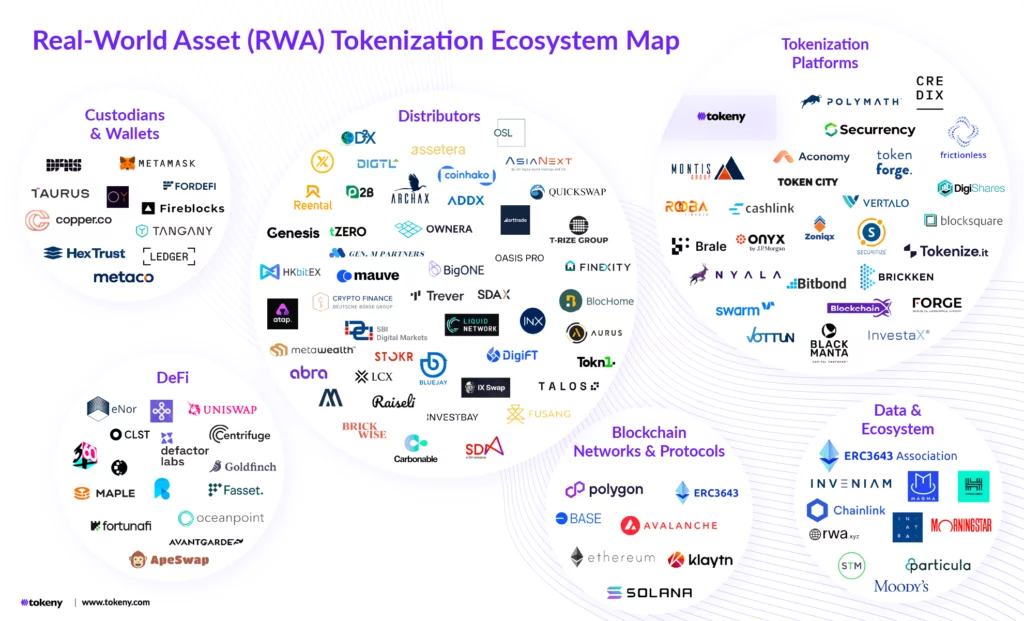
Real-world asset tokenization is the dominant NFT-adjacent trend of 2026. It involves converting physical and financial assets — US Treasuries, private credit, real estate, commodities — into blockchain-native tokens that can be traded, fractionalized, and settled in seconds rather than days.
The numbers are striking. According to RWA.xyz, the total on-chain value of tokenized real-world assets (excluding stablecoins) surpassed $30 billion by mid-2026. BlackRock’s BUIDL fund, launched on Ethereum in March 2024, has grown to more than $2.8 billion in assets under management and is now live on nine blockchains. Franklin Templeton’s BENJI, Ondo Finance’s USDY, and Circle’s USYC rank among the leading tokenized U.S. Treasury products. Meanwhile, tokenized private credit accounts for roughly $14 billion in on-chain value, while tokenized commodities—primarily gold—exceed $5 billion.
What makes RWA tokenization different from earlier NFT use cases is that it is driven by institutional demand, not retail speculation. The settlement efficiency is measurable: tokenized assets settle in seconds, compared to T+1 or T+2 for traditional securities. Regulatory frameworks like the US GENIUS Act for stablecoins have indirectly lowered compliance friction for institutional entry. For businesses, RWA tokenization opens possibilities in fractional ownership, cross-border asset transfer, and programmable compliance, but it also demands rigorous KYC/AML infrastructure and legal structuring.
NFT Gaming and GameFi Evolution
NFT gaming has undergone a fundamental shift since the 2022 play-to-earn collapse. The lesson the industry learned: build the game first, make the earning secondary. By 2026, this approach is producing results.
After a prolonged market correction, blockchain gaming has shown renewed momentum as developers shift their focus from speculative tokenomics to engaging gameplay and sustainable in-game economies. One of the strongest examples is Pixels, a farming RPG built on the Ronin blockchain. The game is free to play, while NFT land ownership remains optional and limited to approximately 50,000 plots. Cosmetic NFTs do not provide gameplay or combat advantages, allowing player progression to depend on skill and participation rather than asset ownership. This player-first approach earned Pixels the Best Browser Game award at the GAM3 Awards 2025.
Beyond Pixels, the blockchain gaming landscape has become increasingly diverse. Telegram-based mini-games have emerged as an effective user acquisition channel, particularly within the TON ecosystem, enabling millions of users to access blockchain-powered games with minimal onboarding friction. At the same time, developers are integrating blockchain infrastructure into higher-quality gaming experiences where the technology operates largely behind the scenes. Players can sign in using familiar methods such as email accounts, while blockchain interactions are reserved for asset ownership, trading, or withdrawals. This “invisible blockchain” approach significantly reduces barriers to adoption and reflects the industry’s broader transition toward mainstream gaming experiences rather than crypto-first products.
For businesses evaluating NFT gaming, the key insight is that sustainable economies require scarcity, gameplay quality, and a model where token value derives from in-game utility rather than new-player inflows.
Hybrid NFTs and ERC-404 Maturity
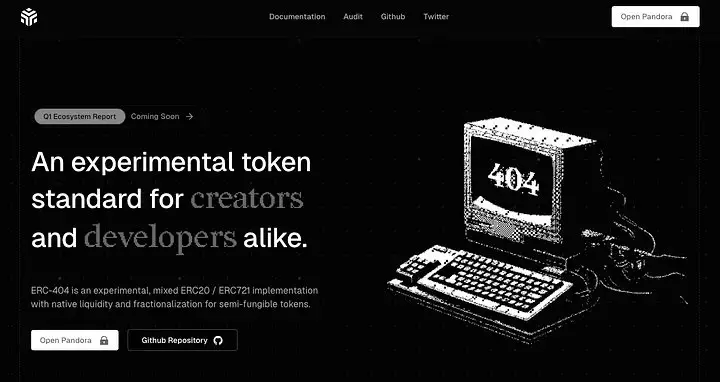
Hybrid NFTs bridge the digital and physical worlds. The ERC-404 standard, introduced by Pandora in early 2024, combines the properties of ERC-721 (non-fungible) and ERC-20 (fungible) tokens, enabling fractional ownership of NFTs where holding portions of a token can eventually yield a complete NFT.
By 2026, the standard has matured. ERC-404 v2 and alternative standards like DN-404 have addressed early technical issues around gas efficiency and transfer logic. The market for hybrid NFTs has expanded beyond speculative trading into practical applications: brands attaching digital certificates of authenticity to physical products, event organizers linking NFT tickets to physical access, and fashion houses blending digital wearables with limited-edition physical clothing.
The significance of hybrid NFTs is that they solve a real problem: proving authenticity and ownership of physical items through a verifiable digital layer. As luxury brands, art collectors, and event operators adopt this model, hybrid NFTs are becoming a bridge between Web3 infrastructure and mainstream commerce.
Utility NFTs: Beyond Digital Collectibles

Utility NFTs have evolved from a niche concept to a broad category spanning ticketing, loyalty programs, digital identity, and decentralized finance. These NFTs provide functional benefits beyond ownership of the token itself.
In ticketing, NFT-based tickets offer verifiable authenticity, transferability with royalty enforcement, and post-event collectible value. In loyalty programs, NFTs enable programmable memberships that can be traded, tiered, and updated without centralized database management. The Starbucks Odyssey program, while discontinued, provided valuable lessons in how mainstream brands can experiment with NFT-based rewards, and why sustainability of the model matters as much as the initial launch.
In DeFi, NFTs serve as collateral for loans, granting access to specific financial services. In gaming, utility NFTs unlock special in-game privileges, characters, and missions. In digital identity, NFTs are being explored as verifiable credentials for education, professional certifications, and access control.
The trajectory is clear: utility NFTs are moving from experimental pilots to production deployments, and the businesses that succeed are those that treat the NFT as a means to solve a user problem, not as a marketing gimmick.
AI-Powered NFTs
The intersection of AI and NFTs is the most novel growth vector in 2026. AI is reshaping the NFT market in three distinct ways.
First, AI-generated art has become an increasingly important part of the NFT ecosystem. Advances in generative AI—from GANs to modern diffusion models—have significantly lowered production barriers, enabling artists and creators to produce sophisticated digital collections at scale. As AI-generated NFTs become more common, industry attention has shifted toward provenance, transparent disclosure of AI involvement, copyright considerations surrounding training data, and marketplace policies governing AI-created content.
Second, dynamic NFTs (dNFTs) extend traditional NFTs by allowing metadata or visual attributes to evolve over time through smart contracts and external oracle data. An NFT’s appearance or properties can change based on real-world events, market conditions, or user interactions. This capability enables adaptive digital collectibles, evolving game assets, personalized experiences, and programmable monetization models that static NFTs cannot support.
Third, AI agent NFTs represent one of the newest frontiers in blockchain innovation. Ethereum’s proposed ERC-7857 standard introduces intelligent NFTs (iNFTs), allowing AI agents to exist as transferable digital assets with privacy-preserving metadata and verifiable ownership. Unlike conventional NFTs that reference static media, iNFTs can encapsulate an AI agent’s capabilities, memory, and execution logic. Although the legal framework surrounding AI-owned digital assets is still evolving, standards such as ERC-7857 illustrate how blockchain infrastructure is adapting to support autonomous AI systems.
For businesses, the AI-NFT intersection opens questions about IP ownership, creator attribution, and the boundary between human and machine-generated value, questions that will shape the next phase of the market.
NFT Regulation and Compliance
Regulation has become a defining force in the 2026 NFT market. The era of regulatory ambiguity is giving way to structured frameworks, though the landscape remains fragmented across jurisdictions.
In the European Union, the Markets in Crypto-Assets Regulation (MiCA) provides the first harmonized framework for crypto-assets across all 27 member states. MiCA explicitly excludes unique, non-fungible NFTs from its scope, but ESMA’s March 2025 guidance introduced an “interdependent value test” that pulls NFT collections into MiCA scope when the market treats series members as functionally interchangeable. In practice, 10,000-piece collections with active secondary market price discovery may face MiCA classification regardless of technical uniqueness. Fractional NFTs almost always fail the exemption test. The grandfathering window for existing CASPs closes on July 1, 2026.
In the United States, the SEC has continued enforcement actions against projects that issue NFTs resembling unregistered securities, while providing clearer guidance on what distinguishes utility tokens from investment contracts. The GENIUS Act, passed in 2025, established a federal framework for stablecoins that indirectly reduced compliance friction for institutional RWA tokenization.
For NFT marketplaces and issuers, the practical implications are significant: KYC and AML procedures are becoming standard, large collections may require disclosure equivalent to whitepapers, and cross-border operations must navigate divergent regulatory regimes. Compliance is no longer optional, it is a competitive advantage.
Ordinals and Bitcoin NFTs: Where They Stand
Bitcoin-based NFTs, introduced through the Ordinals protocol in 2023, have settled into a niche but persistent segment. By January 2026, over 117 million inscriptions exist on Bitcoin, and Bitcoin NFT lifetime sales approach $6 billion, ranking third among all chains.
However, the hype has cooled considerably. The Runes protocol, launched by Casey Rodarmor at Bitcoin’s fourth halving in April 2024, saw explosive initial adoption, consuming over 90% of Bitcoin network fees at launch, but declined to under 2% of daily transactions by mid-2025. BRC-20 token market caps have contracted significantly from their peaks. The activity that remains is driven by dedicated Bitcoin enthusiasts and cultural artifact collectors rather than speculative traders.
The significance of Ordinals is less about current market share and more about what it proved: Bitcoin can support NFT-like functionality, and there is demand for on-chain cultural artifacts on the network. Whether this segment grows or remains a niche depends on Bitcoin’s evolution as a multi-asset platform.
NFTs and the Metaverse: A Measured View
The metaverse hype of 2021-2023 has cooled dramatically, and with it, the narrative of NFTs as the foundation of a thriving virtual economy. Meta’s Reality Labs has faced significant budget cuts, and platforms like Decentraland and The Sandbox report modest active user counts compared to their peak valuations.
However, the underlying concept, NFTs representing ownership of digital real estate, virtual goods, and event access within persistent virtual environments, has not disappeared. It has simply been re-scoped to practical applications. Virtual concerts, digital fashion, and branded virtual experiences continue to use NFTs for access control and ownership verification. The difference is that these applications are now measured against real user engagement metrics, not speculative land prices.
For businesses, the lesson is to treat metaverse NFT initiatives as experimental marketing channels with measurable outcomes, not as long-term asset investments. The technology works; the question is whether the audience is there.
How Businesses Can Leverage NFT Trends in 2026
For business leaders evaluating NFT opportunities, the 2026 landscape offers clearer paths than the speculative era. The key is matching the right NFT application to a specific business problem.
-
Real estate and property: RWA tokenization enables fractional ownership of properties, opening investment to smaller participants and enabling cross-border transactions. Tokenized real estate projects in markets like Dubai are actively building infrastructure for this model.
-
Gaming and entertainment: NFT-based in-game assets give players true ownership and create secondary markets. Studios that prioritize gameplay and treat NFTs as optional enhancements, following the Pixels model, are more likely to build sustainable economies than those that lead with tokenomics.
-
Retail and fashion: Hybrid NFTs linking physical products to digital certificates of authenticity combat counterfeiting and create new customer engagement channels. Luxury brands have demonstrated that NFT-linked physical items can command premium pricing.
-
Ticketing and events: NFT tickets offer verifiable authenticity, transferability with royalty enforcement, and post-event collectible value. The model works for concerts, sports, conferences, and any event where scalping and fraud are concerns.
-
Loyalty and membership: NFT-based loyalty programs enable programmable, tradeable memberships that can be tiered and updated without centralized infrastructure. The key is designing programs where the NFT provides ongoing value, not just a one-time novelty.
-
Finance and DeFi: NFTs as collateral, tokenized real-world assets, and fractional ownership models open new capital efficiency mechanisms. Businesses in regulated industries must invest in compliance infrastructure from day one.
For a deeper dive on marketplace development, see our guide on unlocking the potential of NFT marketplace development.
NFT Market Challenges and Risks in 2026
While the NFT market has matured, it is not without significant risks that businesses and investors must navigate carefully.
-
Market volatility and liquidity: NFTs remain illiquid assets compared to fungible tokens. Even established collections can see floor prices drop 50% or more during market downturns. The 2022 Axie Infinity collapse, where SLP tokens fell from $0.4 to $0.003, demonstrated how quickly play-to-earn economies can unwind when new-player inflows slow. Businesses should not treat NFT holdings as stable stores of value.
-
Regulatory uncertainty: Despite progress with MiCA and the GENIUS Act, the global regulatory landscape remains fragmented. NFT collections that fall under MiCA’s interdependent value test face disclosure and compliance requirements that can be costly to implement. In the US, the line between utility tokens and securities remains contested. Cross-border NFT businesses must navigate conflicting regimes, and the cost of non-compliance, fines, delistings, operational shutdowns, is rising.
-
Smart contract security: NFTs and their associated marketplaces rely on smart contracts that can contain vulnerabilities. High-profile exploits have resulted in millions of dollars in losses. Unlike traditional software, deployed smart contracts are difficult to patch. Businesses must invest in professional security audits, multi-signature controls, and continuous monitoring. For guidance on selecting a development partner with security expertise, see our article on choosing the right NFT exchange development company.
-
Environmental concerns: While Ethereum’s shift to proof-of-stake in 2022 reduced its energy consumption by over 99%, environmental concerns persist, particularly for Bitcoin-based NFTs, where the underlying network remains energy-intensive. Businesses should consider the carbon footprint of their chosen blockchain and communicate this transparently to stakeholders.
-
Intellectual property and AI: The rise of AI-generated NFTs introduces new IP questions. Who owns the rights to AI-generated art: the prompt author, the model developer, or no one? Training-data copyright claims are being litigated. Businesses issuing AI-generated NFTs should document provenance, secure appropriate licenses, and disclose AI involvement to buyers.
Key Takeaways
- RWA tokenization has emerged as the dominant NFT use case, with on-chain value surpassing $30 billion by 2026, driven by institutional products like BlackRock’s BUIDL fund
- AI integration is reshaping NFT creation, trading, and ownership models, with AI-generated collections and autonomous AI agents representing the most novel growth vector
- NFT gaming has shifted to gameplay-first models, with titles like Pixels demonstrating sustainable economies that do not depend on token inflation
- Regulatory frameworks like EU MiCA are bringing institutional clarity, but NFT collections with interdependent value may face classification as regulated assets
- Utility NFTs now power ticketing, loyalty programs, and digital identity beyond collectibles, moving from experimental pilots to production deployments
- Bitcoin NFTs (Ordinals/Runes) remain a niche but persistent segment, with over 117 million inscriptions despite significant hype cooldown
- The metaverse NFT narrative has been re-scoped from speculative land investment to practical marketing and engagement applications
FAQ
What are the biggest NFT market trends in 2026?
The biggest NFT market trends in 2026 are real-world asset (RWA) tokenization, AI-powered NFTs, NFT gaming with gameplay-first models, utility NFTs for ticketing and loyalty, evolving NFT regulation under frameworks like EU MiCA, and Bitcoin Ordinals settling into a niche but persistent segment.
Is RWA tokenization the future of NFTs?
RWA tokenization is the fastest-growing segment of the NFT market, with on-chain RWA value surpassing $30 billion by 2026, driven by institutional products like BlackRock’s BUIDL fund. It represents the shift from speculative collectibles to functional financial instruments.
How is AI changing the NFT market?
AI is changing the NFT market by enabling AI-generated art collections, dynamic NFTs with evolving metadata, and AI agents that can own and trade NFTs autonomously. AI lowers production barriers and introduces new ownership models like intelligent NFTs (iNFTs).
Are NFTs still relevant in 2026?
Yes, NFTs are relevant in 2026 but the focus has shifted from speculative art trading to practical utility, including real-world asset tokenization, gaming ownership, ticketing, loyalty programs, and regulatory-compliant digital identity.
What regulations affect NFT markets in 2026?
Key regulations affecting NFT markets in 2026 include the EU MiCA framework, which exempts unique NFTs but may apply to NFT collections with interdependent value, US SEC guidance on digital assets, and emerging compliance requirements for KYC and AML on NFT marketplaces.
How can businesses get started with NFT development?
Businesses can start with NFT development by identifying a clear use case (ticketing, loyalty, asset tokenization), choosing the right blockchain and token standard, ensuring regulatory compliance, and working with an experienced NFT development partner like HDWEBSOFT.
Final Words
The NFT market trends 2026 outlined above bear little resemblance to the speculative frenzy of 2021. What remains is a maturing technology stack with real institutional adoption, practical business applications, and an emerging regulatory framework. The trends shaping this market, RWA tokenization, AI integration, gameplay-first gaming, utility-driven NFTs, and regulatory compliance, are not passing fads. They represent the direction where capital, builder talent, and user adoption are converging.
For businesses, the opportunity is not in chasing the next hype cycle but in identifying where NFT technology solves a real problem. Whether that is fractional ownership of physical assets, verifiable ticketing, programmable loyalty programs, or authenticated supply chain tracking, the technology is ready. The question is whether the use case is.
HDWEBSOFT provides NFT development services for businesses looking to build production-grade NFT platforms, marketplaces, and applications. If you are evaluating an NFT project and want a technical conversation rather than a sales pitch, talk to our team.