


Types of E-commerce Software Development
E-commerce software spans a wide range of platforms and capabilities. Understanding the available types helps you identify the right solution for your business model and growth stage.

AI-powered functionality

AR/ VR and IoT high-level solutions

B2B and B2C e-commerce solutions

E-commerce website development

E-commerce mobile app development

Headless commerce

Data and analytics

E-commerce redesign and modernization
Dive Into E-commerce Software Development

What is custom ecommerce software development?
Custom Ecommerce Software Development is like building a bespoke suit for your online store. It’s the creation of a unique e-commerce platform specifically tailored to your business needs and functionalities.
Here’s what custom ecommerce software development offers:
- Tailored Functionality: The platform aligns perfectly with your specific business needs and workflows.
- Scalability: The platform can grow and adapt to your evolving business demands, unlike limitations of pre-built solutions.
- Security & Control: You have complete control over data security and access, allowing for customization and integration with existing systems.
- Enhanced User Experience: Create a user-friendly and visually appealing online store that reflects your brand identity.
- Competitive Advantage: Stand out from competitors with unique features and functionalities that cater to your specific market segment.
Understanding Your Business Needs:
- The development process starts with a thorough analysis of your business goals, target audience, product/service offerings, and desired functionalities.
- This might involve workshops, interviews, and competitor analysis to identify your unique selling proposition (USP) and develop a clear roadmap for the online store.
In essence, custom ecommerce software development empowers you to build an online store that’s not just functional but a strategic asset that reflects your brand and drives your business growth.
How to create an ecommerce software?
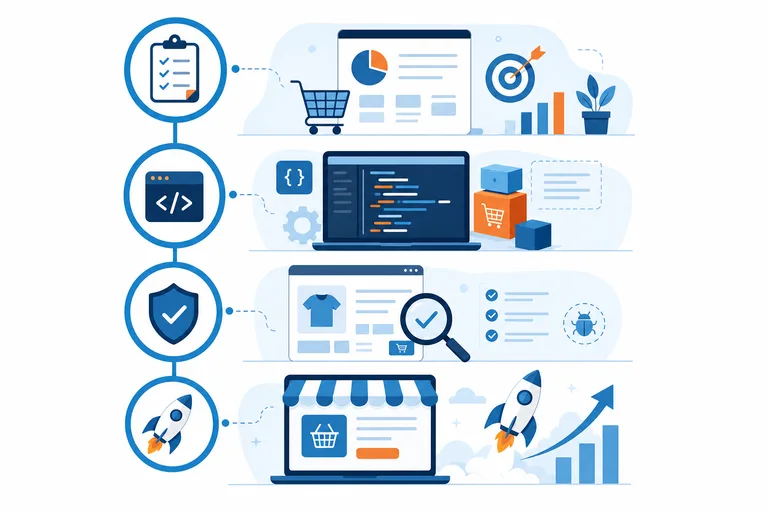
Building an custom ecommerce software development project requires a systematic approach and understanding of various components. Here’s a step-by-step guide:
- Research and Plan: Understand the market and define your target audience. Plan your business model and list required features.
- Development: Choose a suitable technology stack and start development. Build backend logic, frontend components, and integrate third-party APIs.
- Testing and Deployment: Test thoroughly for functionality, usability, and security. Deploy the application on a reliable hosting provider.
- Maintenance and Updates: Regularly update the software to fix bugs and add new features. Monitor performance and security, and apply necessary patches.
- Marketing and Support: Develop a marketing strategy to attract customers. Provide excellent customer support through various channels.
- Analytics and Optimization: Utilize analytics to track user behavior and sales. Optimize based on data to improve conversion rates and user experience.
Building a custom e-commerce platform is a complex endeavor that requires careful planning, execution, and ongoing optimization. Outsourcing to an experienced partner helps you access the right expertise while keeping your team focused on the business.
At HDWEBSOFT, we specialize in crafting custom ecommerce software solutions that empower businesses to thrive online.
Which software is best for ecommerce website development?
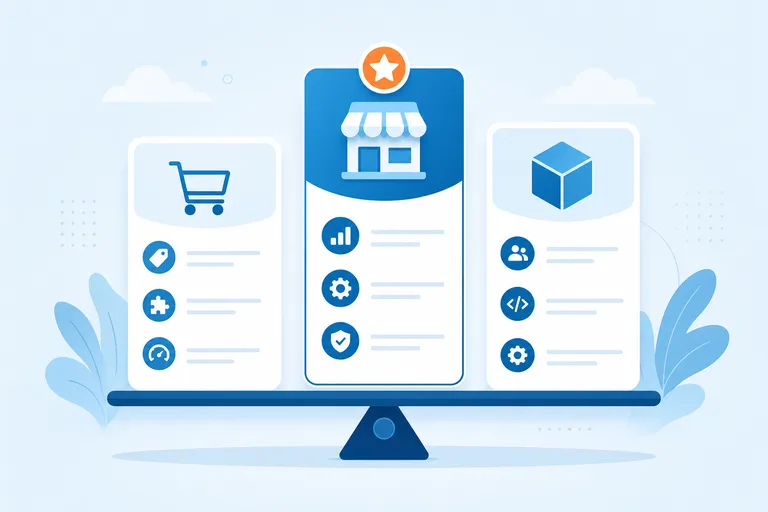
There’s no single “best” software for e-commerce website development, as the ideal choice depends on your specific needs and resources. Here are some popular options:
- Shopify: Great for beginners and small to medium-sized businesses, with a user-friendly interface and extensive app store.
- WooCommerce (WordPress): Offers flexibility and customization, best for businesses familiar with WordPress.
- Magento: Robust platform suitable for large enterprises and businesses with complex needs, but requires technical expertise.
- BigCommerce: Hosted solution with scalability and built-in features, suitable for businesses of all sizes.
- Wix eCommerce: Easy-to-use website builder with integrated ecommerce, ideal for small businesses and beginners.
- OpenCart: Open-source platform with features and extensions, suitable for small to medium-sized businesses.
- PrestaShop: User-friendly open-source platform with customization options, best for small to medium-sized businesses.
Consider factors like ease of use, customization, scalability, and your specific business needs when choosing the best ecommerce software.
Our Ecommerce Development Services
While business models will vary depending on each customer, we strive for perfection by evaluating different approaches individually to reach the most optimal route for each.

Custom ecommerce software development
- Platform-based e-commerce development
- E-commerce marketplace development
- E-commerce applications software development
- E-commerce mobile apps and loyalty programs
- E-commerce analytics solutions
- E-commerce automation solutions
- B2B and B2C Magento development

Retail software development
- In-store software solutions
- Inventory management software
- Supply chain management solutions
- Demand prediction analytics
- Order management software

E-commerce store customization & integrations
- E-commerce website redesign
- WordPress development with WooCommerce
- E-commerce performance optimization
- Payment systems integrations
- CRM custom development & integrations
- Custom modules and plugin development
- Other third-party software integrations

E-commerce migration
- E-commerce migration plan
- Platform selection advisory
- E-commerce database migration
- E-commerce re-platforming
- Third-party extensions and integrations migrations

E-commerce consulting and support services
- Specifications for custom e-commerce software/website/application development
- E-commerce security consulting
- E-commerce platform consulting
- E-commerce website auditing

E-commerce testing services
- QA testing services
- QA testing automation solutions development
- Performance, scalability, and reliability testing
- Functionality and integration testing
- Analytics, Data, and backend testing
Benefits of eCommerce Software Development Services with HDWEBSOFT

A diverse pool of talents for instant support or new team formation

Enterprise-level project delivery

Security warranty in the remote work conditions
Expertise with e-commerce projects in different stages
How E-commerce Software Development Improves Your Business
Custom e-commerce solutions help businesses grow faster, operate more efficiently, and deliver better buying experiences. Here is how our platforms create measurable impact across key business dimensions.
Expanded Reach and Market Penetration
Security and Compliance
Scalability and Flexibility
Data-Driven Insights and Decision Making
Optimized Operational Efficiency
Enhanced Customer Experience
Why Hire HDWEBSOFT as your eCommerce Software Development Company

HDWEBSOFT, a leading software development company in Vietnam, has been leveraging cutting-edge technologies to meet our customers’ demands for over 14 years. Our software specialists are well-certified and experienced in providing and building custom technological solutions. Moreover, we offer an in-depth analysis to understand our customers’ existing IT architecture and a detailed plan for cost efficiency before development. For a structured framework on evaluating ecommerce development partners, see our guide on choosing an ecommerce website development company.
FAQs
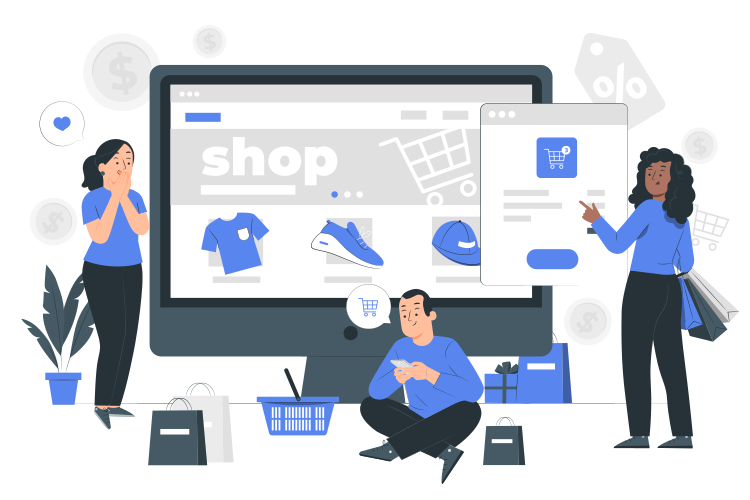
Ecommerce website development tools are classified by their purpose. There are website constructors, SEO analysis tools, web tools for product research, and more currently in use. Any decent Ecommerce Software Development Company must possess the capability to include such tools.
The top ecommerce web development tools can be categorized into three main groups:
- E-commerce platforms: These are all-in-one solutions that provide everything you need to set up and run your online store, such as Shopify, BigCommerce, and WooCommerce.
- Front-end development tools: These tools help you build the visual and interactive elements of your website, such as HTML, CSS, JavaScript, and frameworks like Bootstrap, React, Angular, and Vue.js.
- Back-end development tools: These tools handle the server-side logic and database interactions of your website, such as programming languages like PHP and Python, and frameworks like Ruby on Rails.
Choosing the right tools depends on your specific needs and technical expertise, or you can use outsourcing ecommerce software development for support. Consider factors like your budget, project complexity, and desired level of customization when making your decision.
It depends on your required functionality, scalability factors, and overall activities. Simply provide us with the core project information and we will recommend the best fit. Here's a quick comparison of some popular platforms to help you review:
| Platform | Pros | Cons |
|---|---|---|
| Shopify | User-friendly, wide range of features and integrations, good for all business sizes | It can be expensive for larger businesses, limited customization options on lower plans |
| BigCommerce | Scalable, powerful features, good for medium to large businesses | Steeper learning curve than Shopify, higher pricing |
| WooCommerce | Free, open-source, highly customizable | Requires technical expertise to set up and manage, limited built-in features |
| Wix | Easy to use, drag-and-drop interface, affordable | Limited features compared to other platforms, less control over design and functionality |
| Squarespace | Beautiful templates, user-friendly, good for small businesses | Limited customization options can be expensive for larger businesses |

As an ecommerce software development expert, we understand the importance of thorough and regular e-commerce audits. They provide valuable insights into your online store's strengths and weaknesses, ultimately guiding strategic decisions for improvement and growth. Here are how we can approach an e-commerce audit:
- Define Your Goals and Scope
- Gather information and Data: collect data from various sources such as website analytics tools, customer feedbacks,...
- Analyze and Evaluate: assess website performance metrics, SEO audit, UX (user experience) audit, user journey and buying process
- Recommend and Improvement: Develop clear, actionable recommendations for each area you've identified
- Additional Considerations: competitor analysis, security audit, accessibility audit

Ecommerce software development services can significantly enhance your online store's security in several ways:
- Implementing strong measures: SSL encryption, PCI DSS compliance, regular security checks.
- Secure coding practices: Experienced developers following secure coding principles and keeping software up-to-date.
- User access control: Strong passwords, multi-factor authentication, role-based access.
- Secure data handling: Data encryption at rest and in transit, regular backups on secure platforms.
- Partnering with a security-focused e-commerce software development company helps you build a secure and trusted online store. Remember, security is an ongoing process, so regular assessments and updates are crucial.

When businesses deploy custom ecommerce software development, a personalized shopping experience often results in achieving greater success in the competitive e-commerce landscape, businesses can differentiate themselves, improve efficiency, and ultimately :
- Boosting sales: Relevant recommendations and offers lead to higher conversion rates and larger average orders.
- Enhancing customer experience: Personalized interactions create satisfied and engaged customers who feel valued.
- Building stronger relationships: Personalization fosters loyalty and repeat business.
Case Studies
HDWEBSOFT takes pride in being a leading Software Development Company and understands that prestige is important in this line of work. Therefore, let our successful projects speak for us and our technological capability. Learn more about them below.
eBay Integration to an All-in-one Seller Workspace
Working with different eCommerce solutions is so much easier with HyperSpace.

Magento Integration to an All-in-one Seller Workspace
Working with different eCommerce solutions is so much easier with HyperSpace.

Reverb Integration to an All-in-one Seller Workspace
Working with different eCommerce solutions is so much easier with HyperSpace.