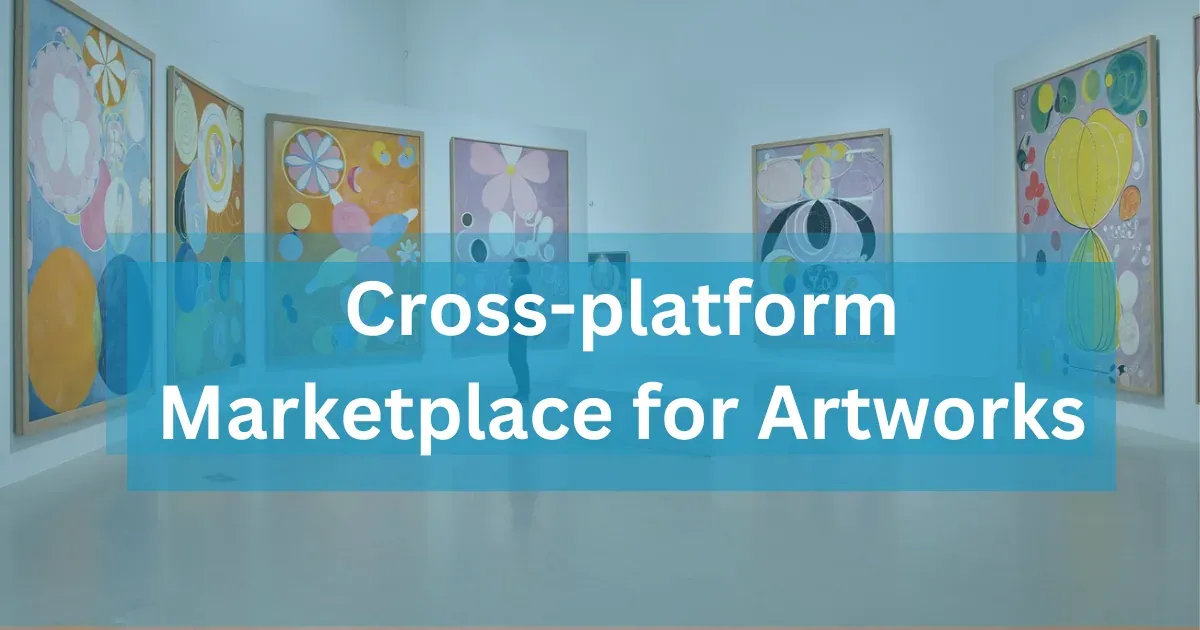
Cross-platform marketplaces are revolutionizing the way we think about online shopping and business. These platforms allow seamless transactions and interactions across various operating systems and devices, offering unparalleled convenience and accessibility. In addition, Amazon, eBay, and more are examples of cross-platform applications.
Collectors is a valuable resource for French collectors of all types, from hobbyists to professionals, that helps collectors digitize their collections while providing unrivaled privacy solutions to manage and present the public face of their collections. With Collectors, managing your collection is now simple, effortless, and free for French collectors.
Features
A cross-platform marketplace for artworks, artists, and collectors has several features that provide collection optimization and security solutions:
-
Collectors
This improves the features of collectors by adding more specific and compelling details about their motivations, methods, and relationships. For example, instead of saying that a collector is passionate about supporting emerging artists, you could say that they are a self-described “art savior” who has made it their mission to find and collect the work of young artists before they become famous. Or, instead of saying that a collector has a personal connection to each of the artworks in their collection, you could say that they have a story about how each artwork came into their possession and how it has touched their life.
-
Collections
This improves the feature of collections by adding more contextual information about the artworks they contain. For example, you could not only list the artist, medium, and date of creation for each artwork, but you could also provide information about the artwork’s historical context, its significance to the artist’s career, or its relationship to other artworks in the collection.
-
Artworks
This improves the feature of artworks by adding more in-depth analysis of their meaning, symbolism, and historical context. For example, you could not only identify the symbols used in an artwork, but you could also explain their meaning and how they contribute to the overall message of the artwork. You could not only discuss the historical context of an artwork, but you could also explain how it reflects the artist’s own experiences or the social and political climate of the time.
-
Artists
This improves the feature of artists by adding more personal information about their lives and careers. For example, you could not only list the artist’s biography and artistic style, but you could also share anecdotes about their childhood, their influences, or their working methods.
-
Galleries
This improves the feature of galleries by adding more rich descriptions of their history, mission, and selection of artworks. For example, you could not only list the gallery’s history and mission, but you could also describe the gallery’s unique personality and its role in the art world. Or you could not only list the gallery’s selection of artworks, but you could also explain why the gallery chose to acquire each artwork and how it fits into the gallery’s overall vision.
-
Exhibitions
This improves the feature of exhibitions by adding more nuanced descriptions of their curatorial concept, educational programs, and impact. For example, you could not only list the exhibition’s curatorial concept and educational programs, but you could also explain how the concept and programs are implemented in the exhibition and how they contribute to the overall experience of the viewer. You could not only list the exhibition’s impact, but you could also explain how the impact was measured and what it means for the art world.
-
Hashtags
This improves the feature of hashtags by adding more specific and contextual information about their meaning, use, and impact. For example, you could not only list the meaning of a hashtag but also explain how it is used on social media and its impact on the art world. Or you could not only list the different ways that hashtags are used by collectors, artists, galleries, and other stakeholders in the art world, but you could also explain how these different uses have contributed to the overall development of the art world.
Technologies of Cross-platform Marketplace
Collectors use a variety of technologies, including JavaScript, Meteor, Node.js, Python, Angular.js, and Django, to build their platform. This technology stack allows them to build a scalable and reliable platform for their users.
- JavaScript is a front-end programming language used to create interactive web pages and web applications. Collectors uses JavaScript to create their platform’s user interface. Learn more about our large pool of JavaScript development services.
- Meteor is a full-stack JavaScript platform that makes it easy to build modern web and mobile applications. Collectors uses Meteor to build the backend of their platform.
- Node.js is a JavaScript runtime environment that allows JavaScript to be used outside of the browser. Collectors uses Node.js to power some of the backend services of their platform. Learn more about our leading Node Development Services.
- Python is a general-purpose programming language that is used for a wide variety of tasks, including web development, data science, and machine learning. Collectors use Python to create their search engine and recommendation system, among other backend services on their platform. Learn more about our Python Development Services.
- Angular.js is a front-end JavaScript framework that is used to build single-page web applications. Collectors uses Angular.js to build the user interface of their platform. HDWEBSOFT is a prominent Angular Development Company in Vietnam offering superior Angular Development Services.
- Django is a Python web framework that is used to build dynamic websites and web applications. Collectors uses Django to build the backend of their platform. At HDWEBSOFT, we offer full-stack Django Development Services.
Challenges
There were a few challenges that we faced during the development of the collectors. These challenges included:
- The early version of Meteor did not have built-in support for SEO, so we had to find a way to add it ourselves. This was a challenge because SEO is a complex topic and there are many different ways to do it. We had to carefully consider the best approach for our app, taking into account the technical constraints of the early version of Meteor.
- We also had to make sure that our SEO implementation was compatible with the latest version of the framework. This required us to stay up to date with the latest changes to Meteor, which was an ongoing challenge.
- As a result, we had to put in a lot of time and effort to come up with a creative and effective solution for supporting SEO in our SPA. We had to mobilize our top-notch custom software development process to fulfill the requirements.
Business outcomes of Cross-platform marketplace
Collector is a digital platform that functions like a digitally crowdsourced museum. It allows anyone online to view, discuss, curate, and archive 45,000 artworks from the world’s unseen private collections. This makes Collectors a valuable resource for art lovers and researchers alike. Collectors’ unique business model has several positive business outcomes, including:
- Increased access to art: Collectors make art more accessible to people around the world. Anyone with an internet connection can access Collectors and view its vast collection of artworks. This is especially beneficial for people who live in areas with limited access to traditional museums.
- New opportunities for artists and collectors: Collectors provide a new platform for artists to share their work and for collectors to discover new artists. This can lead to new opportunities for both artists and collectors.
- Increased engagement with art: Collectors encourages people to engage with art in new ways. By allowing users to discuss, curate, and archive artworks, Collectors helps people to learn more about art and to develop their own appreciation for art.
Conclusion
This project demonstrates HDWEBSOFT’s capacity in cross-platform marketplace application development including Android app development, iOS app development, and web application development. These skills make us compatible with the software outsourcing industry in Vietnam.
Specifically, we were able to:
- Help businesses save time and money, reach a wider audience, and bring their products to market more quickly.
- Reduce risk and stay ahead of the curve in the rapidly growing cross-platform development market.
We are confident that we will be a valuable partner for businesses looking to develop cross-platform marketplace applications. Our development team commits to quality and possesses extensive experience.. If you have a project that you need help with, please get in touch with us today.
Recommendations
Cross-platform application development is a great way to save time and build services that can run on multiple major platforms. Businesses, irrespective of their size, can benefit from this option. It’s especially useful for those that are creating new products or services, or have limited resources.
Here are some recommendations for businesses that are considering using cross-platform application development:
- Choose the right cross-platform development framework: There are many different cross-platform development frameworks available, so it is important to choose one that is right for your specific needs. Consider factors such as the platforms you need to support, the features you need, and your budget.
- Work with an experienced cross-platform development team: Cross-platform development can be complex, so it is important to work with an experienced team that has the skills and knowledge to develop high-quality cross-platform apps.
- Test your apps thoroughly: It is important to test your cross-platform apps thoroughly on all of the platforms that you plan to support. This will help to ensure that your apps work properly and meet the needs of your users.
Explore related work
Continue with related case studies, services, industries, and regional delivery experience.